
Crystal Therapy Explained: How It Works & What to Expect
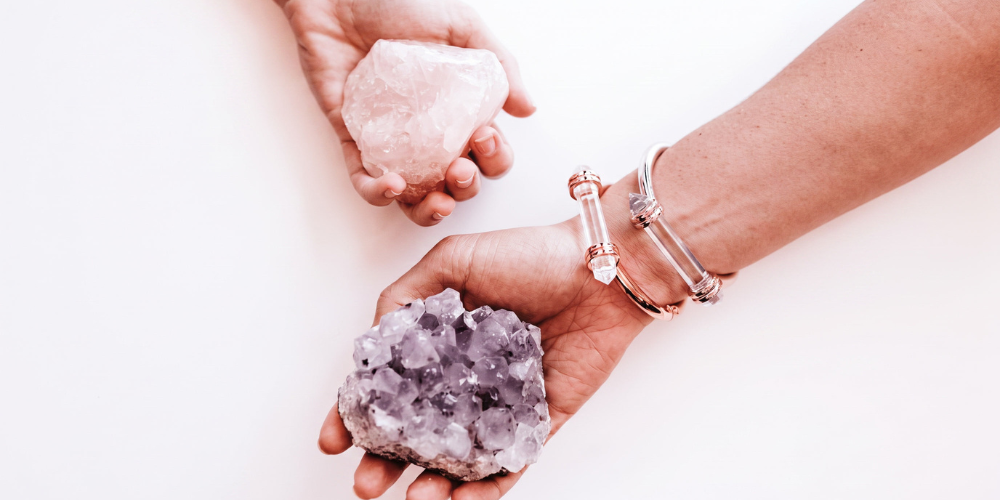
Crystal therapy sits in a space where opinions tend to polarize quickly. It is often framed as either a cure-all or something not worth considering at all. Neither description reflects how most people actually experience it.
For many, crystal healing therapy is less about belief and more about how it feels to slow down, be held in a structured session, and engage with intention in a nonverbal way. A crystal therapist is not diagnosing or treating illness, but creating a setting where the nervous system can soften, and attention can turn inward.
This guide breaks down what crystal therapy actually involves, what typically happens during a session, how practitioners work with crystals, and what you can realistically expect if you choose to try it. The goal is clarity without dismissal, and curiosity grounded in discernment rather than hype.
What is crystal therapy?
Crystal therapy is an alternative or complementary practice that uses crystals with the intention of supporting physical, emotional, and psychospiritual well-being.
Different practitioners explain the “how” differently:
Some work with energy frameworks such as chakras, aura, or subtle body fields.
Others describe it as a ritual practice that supports reflection, calm, and intention.
Many blend both, because human beings are not only logical creatures. We are meaning-making creatures.
From a scientific lens, major wellness sources note that strong clinical evidence for crystals as a medical healing modality is limited, and any benefits people feel may overlap with placebo, relaxation, and personal meaning.
A gentle way to hold this is:
Crystal therapy can support how you feel. It should not be presented as replacing medical care.
How is crystal healing therapy practiced
Here is what crystal healing therapy often looks like in real life, not on social media.
You arrive. The space is quieter than your week. You sit down, breathe a little slower, and someone asks a simple question that most of us forget to ask ourselves:
“What do you need right now?”
From there, sessions can vary, but these are the most common approaches:
1) Crystal placement on the body
Crystals may be placed on the chest, the forehead, the belly, the palms, or around the feet. Placement is usually symbolic. Heart area for softness. Lower body for grounding. Head area for clarity.
2) Crystals placed around the body
Some practitioners create a circle, a line, or a layout around you while you rest. This can feel safer for people who do not love the sensation of weight on the body.
3) Crystal grids in a space
A crystal grid is an intentional layout, often geometric. For many people, it functions like a visual prayer. It gives the mind something steady to return to.
4) Pairing crystals with other practices
Crystal therapy is often combined with meditation, Reiki-style energy work, gentle breathwork, or sound.
At Anahata, crystal work is woven into a sacred, sensory approach to healing that can include crystalline activation guidance and the resonance of crystal alchemy singing bowls.
What to expect: Most sessions feel subtle. People often describe feeling calmer, softer, more present, or emotionally clearer. Not “cured.” Not “fixed.” Just more held.
What a crystal therapist does
A true crystal therapist is not simply someone with a collection.
A good practitioner is a guide, and the session is a container.
In a well-held crystal therapy session, a crystal therapist typically:
Listens carefully and helps you name what you want support with
Selects crystals based on intention, tradition, and the energy of the moment
Creates a safe environment and checks in for comfort and consent
Guides you into stillness, then places stones gently and with purpose
Closes the session with grounding and integration
A key detail: ethical practitioners do not make medical promises. EBSCO notes that crystal healing is not supported by robust clinical trial evidence for the wide medical claims often associated with it, and it encourages seeking licensed medical guidance for health concerns.
This is one of the easiest ways to tell the difference between real support and marketing.
Common crystals used in healing practices
This part can get overwhelming quickly. There are thousands of minerals. Everyone has an opinion. So let’s keep it simple.
Here are a few crystals you will see often in crystals for healing work, along with the meanings people commonly associate with them:
Clear quartz: clarity, amplification, intention focus
Amethyst: calming, sleep rituals, spiritual connection
Rose quartz: love, softness, emotional comfort
Obsidian: protection, truth, releasing what is heavy
Jasper: grounding, steadiness, support through stress
People often ask, “What are crystals used for?”
In practice, most people use them for one of three things:
A calming ritual
A symbolic anchor (a reminder to return to an intention)
A spiritual language for inner work
That is why crystals for health is a phrase you will see online, but it needs careful framing. Crystals may support how you feel, especially in stress-heavy seasons, but they should not be marketed as medical treatment.
Historical and cultural context
Crystals are not new. What is new is the way we talk about them online.
Across many cultures, stones have been used as protection objects, symbolic medicine, and spiritual tools. There is historical evidence of amulets being used in ancient medical contexts, where people believed the material of the stone carried protective or healing value, in ways that echo modern crystal beliefs.
You do not have to believe every ancient claim to appreciate the human truth underneath it:
When people are scared, grieving, or in pain, they reach for meaning. They reach for ritual. They reach for something they can hold.
Crystal therapy sits inside that very old human impulse.
What crystal therapy can and cannot do
This is the part that makes the practice trustworthy.
What crystal therapy can do
Crystal therapy often supports experiences shaped by the nervous system and the mind-body connection, such as:
Relaxation and downshifting from stress
Meditation support and emotional reflection
Intention setting and habit reinforcement
Feeling held, soothed, or spiritually connected
Healthline notes there is limited scientific evidence for crystals as a healing modality, and that perceived benefits may connect with placebo and suggestion for some people.
Harvard Health also explains that placebo effects can be real and measurable in how symptoms are experienced, especially where the brain plays a strong role in perception, such as pain.
That does not make crystal therapy “fake.” It simply places it where it belongs: as a complementary practice that can support wellbeing and meaning.
What crystal therapy cannot responsibly promise
Crystal therapy should not claim to diagnose, treat, or cure disease. EBSCO notes that many crystal healing claims lack strong scientific support.
So if someone tells you crystals will replace your doctor, fix a serious illness, or guarantee outcomes, treat that as a red flag, not an invitation.
Is crystal therapy safe?
For most people, crystal therapy is physically low risk, but safety is still worth discussing with care.
NCCIH emphasizes that safety depends on the specific practice and the health of the person using it, and it encourages thinking about safety for any complementary approach.
Here are practical safety points that matter:
Physical comfort
Crystals can feel heavy or uncomfortable in sensitive areas
If you have migraines, vertigo, or anxiety, long stillness can sometimes feel activating, so sessions should be paced gently
Emotional safety
Some people feel deeply moved in a session. That can be healing, but it should never feel forced. A good practitioner will keep you grounded and offer choice throughout.
Common sense care
Not every crystal is safe to put in water or on the skin for long periods. Some minerals can be damaged by water or contain elements that are not meant to be used carelessly. Healthline specifically advises caution around cleansing methods and knowing your stone.
Complementary care boundaries
NCCIH also advises talking with your healthcare providers about complementary approaches you are considering, including questions about safety and interactions.
How to choose a qualified crystal therapist
If you are considering booking a session, here is a simple filter that protects you.
Green flags
They explain what crystal therapy is and what it is not
They ask for consent and prioritize comfort
They speak about well-being without making medical promises
They help you integrate gently, instead of leaving you raw
They welcome questions and do not pressure you to buy more and more
Red flags
Fear-based selling or “you are cursed unless…” language
Telling you to stop medication or avoid medical care
Promising guaranteed outcomes
Making serious health claims while dismissing evidence
If you want a more guided, intentional approach to crystal connection, Anahata’s Crystalline Activation Consultation is designed to support crystal selection and energetic alignment in a held, sacred way.
What to expect in your first session
If you have never done crystal therapy before, here is the honest version.
You might feel:
A deep sense of calm
A soft emotional release
A clearer mind
A quieter body
Or you might simply feel… rested. And that is not small.
Sometimes the most healing thing is not fireworks. It is a nervous system that finally gets a moment of silence.
Conclusion and next step
Crystal therapy does not have to be sold with drama to be valuable.
It can be a practice of returning.
To the breath.
To the heart.
To the part of you that knows what you need, before your mind starts arguing.
If you want to explore crystal therapy in a guided, intentional way, you can start with Anahata’s Crystalline Activation Consultation, or browse Anahata Holistic Healing to feel the energy of the space and offerings.
FAQ
What is crystal therapy, in simple terms?
Crystal therapy is a complementary practice where crystals are placed on or around the body to support relaxation, emotional balance, and intention. Many people connect to it spiritually or symbolically. Evidence for medical healing claims is limited, so it is best approached as supportive care, not a replacement for healthcare.
Does crystal healing therapy actually work?
It depends on what “work” means. Strong clinical evidence for crystals as medical treatment is limited, but many people report feeling calmer or more centered after a session. That benefit may relate to ritual, relaxation, and placebo-related effects, which Harvard notes can be real in how symptoms are experienced.
What does a crystal therapist do during a session?
A crystal therapist helps you clarify an intention, selects stones, and guides a session that may include crystal placement, quiet rest, and grounding. A trustworthy practitioner avoids medical promises and treats crystal therapy as complementary. Safety, consent, and integration are key signs you are in good hands.
Is crystal therapy safe for everyone?
Crystal therapy is usually low risk, but safety depends on your health and the style of the session. NCCIH advises considering safety with any complementary approach and talking with healthcare providers about potential concerns. If you are trauma sensitive or easily overwhelmed, choose a practitioner who works gently and prioritizes grounding.
How do I choose the best crystals for healing?
Start with what you want support with, like calm, grounding, or self-worth, then choose crystals whose meanings match that intention. Many people begin with clear quartz, amethyst, rose quartz, obsidian, or jasper. Use crystal meanings as a personal language, not a medical prescription.