
The Spiritual Meaning of Mary Magdalene: Divine Feminine, Healing & Sacred Wisdom
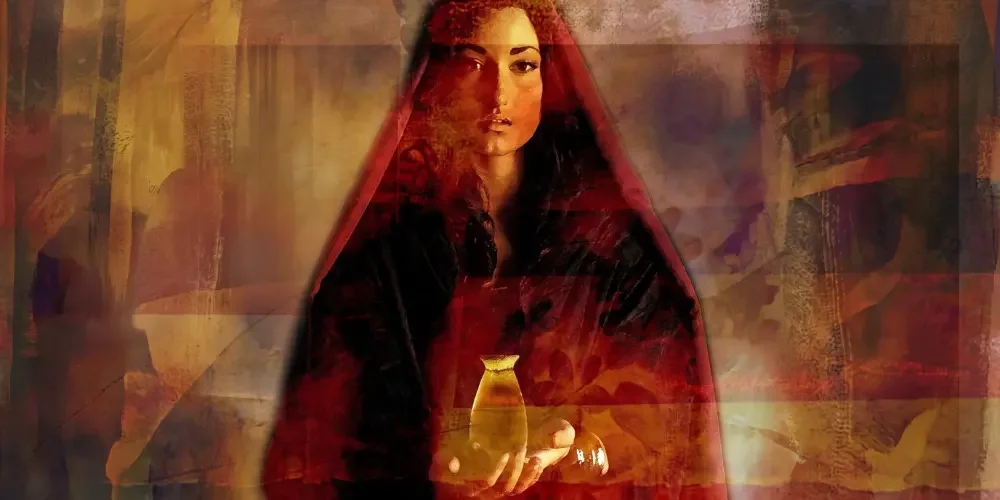
Magdalena is a form of Magdalene, the name associated with Mary Magdalene. Spiritually, it has come to represent devotion, inner strength, healing from shame and the return of feminine wisdom that has been dismissed, misunderstood or spoken for by others.
Mary Magdalene has been carrying other people’s stories for a very long time.
She has been called a prostitute, a penitent, a mystic, a disciple, a lover and a saint. Some of these identities grew from religious tradition. Others came from novels, films and modern spiritual movements. Not all of them can be found in the earliest accounts of her life.
Perhaps that is one reason she still draws people in.
There is the Mary Magdalene we inherited, and then there is the woman who begins to appear when we look again.
What Is the Meaning of Magdalena?
Magdalena is used in several languages as a form of Magdalene.
Traditionally, Magdalene has been understood to mean “Mary from Magdala,” referring to a place connected with the Sea of Galilee. The name Magdala itself comes from a Semitic word related to a tower or elevated structure.
There is some debate, however, around whether “Magdalene” originally referred to her hometown or functioned more like a title. Some scholars have suggested it could have carried the sense of Mary the Tower, or Mary the Magnified. That interpretation is interesting, but it is not settled historical fact.
Still, the image of a tower has taken on a life of its own in spiritual readings of the name.
A tower stands above the surrounding landscape. It sees farther. It remains upright through weather and time. For people exploring the spiritual Magdalena meaning, the name may therefore evoke:
Inner steadiness
Clear spiritual sight
Courage under pressure
A strong feminine presence
The ability to witness without turning away
A name does not determine someone’s destiny. Yet sometimes its imagery gives us a new way to understand the person who carried it.
Who Was Mary Magdalene?
The most honest answer is that we know less about Mary Magdalene than popular culture often suggests.
The canonical Gospels describe her as a follower of Jesus. Luke names her among a group of women who travelled with Jesus and the Twelve and helped support the ministry from their own resources.
She also appears at the crucifixion. Mark places her among the women who remained nearby and later observed where Jesus was buried.
Then comes the part of her story that shaped everything that followed.
Mary Magdalene goes to the tomb. In John’s account, she remains outside weeping after the others leave. She encounters Jesus there and is sent to tell the disciples what she has seen.
Her role is not small.
She is not standing at the edge of the story as a nameless observer. She becomes a witness and a messenger at the most important turning point in the Christian narrative.
In 2016, the Catholic Church elevated her liturgical observance to a feast and formally emphasized the traditional title “apostle of the apostles.”
Was Mary Magdalene a prostitute?
The Gospels do not identify Mary Magdalene as a prostitute.
That image developed through the blending of several different women in the biblical narratives, including an unnamed “sinful woman.” The association became deeply rooted in Western Christian culture, even though the texts themselves do not make that connection.
This matters for more than historical accuracy.
For centuries, Mary Magdalene was often remembered through a story of sexual sin that had been placed upon her. Her role as disciple, supporter, and resurrection witness became overshadowed by a label she was never given in the Gospels.
There is something painfully familiar in that.
How many women have been reduced to one rumor, one mistake, or one version of events told by somebody else?
The Spiritual Meaning of Magdalene
The spiritual meaning of Magdalene is, in many ways, about being seen correctly.
Mary’s story speaks to anyone who has felt misread. Anyone whose emotional depth was treated as instability. Anyone whose love was turned into something shameful, or whose spiritual authority was dismissed because it did not arrive in the expected form.
She carries several spiritual themes at once.
She represents devotion
Mary Magdalene stays close through suffering.
Her devotion is not shown through grand speeches. It is visible in her presence. She follows, witnesses, grieves, and returns to the tomb.
There are moments when love looks like action. There are other moments when love simply refuses to leave.
She represents healing after an old identity
Luke describes Mary as someone from whom seven demons had gone out. The text does not explain what that experience meant medically, psychologically or spiritually, and it would be careless to force a modern diagnosis onto an ancient account.
What the story does suggest is that Mary was known not only for what she had survived, but for who she became afterward.
Her past did not disqualify her from spiritual closeness or leadership.
She represents the courage to speak
Mary carries news that the other disciples do not yet understand.
Luke’s resurrection account even says that the women’s report initially seemed like nonsense to those who heard it.
Many women know this experience. You speak clearly, yet the truth is treated as unreliable because it came through you.
Magdalene energy does not guarantee that everyone will believe you. It asks whether you will still speak.
Mary Magdalene and the Divine Feminine Rising
The phrase divine feminine rising does not come from the Gospel accounts. It belongs largely to modern spiritual language.
The Divine Feminine is usually understood as a sacred principle connected with intuition, receptivity, creation, embodiment, compassion and emotional wisdom. It is not limited to biological women. People of any gender can embody these qualities.
Mary Magdalene has become associated with the Divine Feminine because her story sits at the meeting point of devotion, spiritual authority and historical misunderstanding.
For many people, her return to prominence represents something larger than the recovery of one woman’s reputation.
It reflects a desire to restore qualities that have often been pushed aside:
Intuition alongside reason
Embodiment alongside intellect
Compassion alongside power
Relationship alongside hierarchy
Direct spiritual experience alongside formal authority
The divine feminine rising is not about replacing masculine energy or declaring one superior to the other.
It is about noticing where balance was lost.
When tenderness is mistaken for weakness, balance is lost.
When women can serve but are not trusted to lead, balance is lost.
When the body is treated as an obstacle to spiritual life, balance is lost.
When emotion is dismissed before anyone asks what it is trying to reveal, balance is lost.
Mary Magdalene has become a spiritual figure through whom many people explore that imbalance.
We should still be careful. Modern spiritual interpretations can be meaningful without being presented as hidden historical facts. There is no reliable evidence that Mary Magdalene was Jesus’ wife, the mother of his child or the leader of a secret bloodline.
Her known role is already remarkable. We do not need to invent a different life to make her important.
Symbolism Associated with Mary Magdalene
Over the centuries, artists and spiritual communities have surrounded Mary Magdalene with symbols.
Some come from Christian art. Others are later devotional or metaphysical associations.
The red robe
Mary Magdalene is frequently shown wearing red.
Red can represent love, vitality, courage, and the physical body. In Magdalene spirituality, it may also speak of passion that is not separated from holiness.
Her devotion is not cold or distant. She loves, grieves and responds with her whole being.
The jar
In religious art, Mary Magdalene often carries a jar of ointment.
This image developed partly because she was historically confused with other women in the Gospel stories. Even so, the vessel has become one of her most recognizable symbols.
Spiritually, a vessel can represent the body, receptivity and the ability to carry something sacred without owning it.
The rose
The rose is common in modern Magdalene imagery, although it is not a central symbol assigned to her in the canonical Gospels.
It may represent the heart, sacred love and wisdom that reveals itself gradually. A rose opens in layers. It does not expose its center all at once.
There is something Magdalene-like in that.
The egg
Some Eastern Christian traditions connect Mary Magdalene with a red egg and the proclamation of the resurrection.
The egg naturally symbolizes life hidden inside what appears closed or still. It is an image of possibility waiting beneath the surface.
The skull and cave
In later art, Mary is sometimes shown with a skull or living in solitude.
These images connect her with mortality, contemplation and the stripping away of false identity. They ask what remains when reputation, appearance and worldly approval no longer define us.
What Can We Learn from Mary Magdalene Today?
We do not need to turn Mary Magdalene into a perfect spiritual heroine.
In fact, doing so might repeat the same mistake in a different direction. She has already carried enough projections.
What we can do is pay attention to the pattern of her story.
Stay present without abandoning yourself
Mary’s presence at the crucifixion is often read as proof of devotion.
Yet presence should not be confused with remaining in situations that are abusive or unsafe. The lesson is not that spiritual women must endure everything quietly.
It is that we can learn to stay emotionally present with truth, even when truth is painful.
Do not let shame become your identity
Mary’s later reputation shows how easily a label can overtake an entire life.
Many people carry identities built from a difficult period: the rejected one, the unstable one, the woman who failed, the person who should have known better.
An experience may be part of your story without becoming your name.
Trust the wisdom that comes through direct experience
Mary knew what she had encountered before the people around her understood it.
There will be moments when your own inner knowing arrives before external confirmation. Discernment is still necessary. Intuition should not become an excuse to ignore reality.
But neither should you dismiss every inner truth because someone else has not approved it yet.
Speak, even when your voice shakes
Mary was given something to carry back to others.
Most of us will never receive a message that changes a religious tradition. Yet we are still asked to speak in smaller ways.
To say what happened.
To name what hurts.
To admit what we want.
To tell the truth before it becomes easier.
How to Connect with Magdalene Energy
Connecting with Magdalene energy does not require adopting every modern belief associated with her.
Begin with what is already there: presence, grief, devotion, witness and the recovery of a woman’s voice.
Read her story for yourself
Read the passages in which Mary Magdalene appears, particularly Luke 8, Mark 15 and 16, and John 20.
Notice what is actually written.
Then notice what you assumed would be there.
That gap can tell you a great deal about how inherited stories shape perception.
Sit with the name you were given
Write down one label that has followed you.
Who gave it to you?
Was it ever completely true?
What might become possible if you stopped introducing yourself to your own soul through that old name?
Create a simple Magdalene altar
You might place a red candle, a rose, a small bowl of water or an empty vessel somewhere quiet.
There is no need to buy a collection of spiritual objects. Choose one or two things that hold genuine meaning for you.
Sit there when you need to remember your own voice.
Let grief speak
In John’s account, Mary is weeping when recognition comes.
Her grief does not make her spiritually unworthy. She is not told to become less emotional before the encounter can happen.
Give yourself ten quiet minutes to feel what you have been trying to move past too quickly. No fixing. No turning the pain into a lesson before it is ready.
Just honesty.
Practice telling one clean truth
Choose something small but real.
Say no without inventing an excuse.
Admit that you changed your mind.
Tell someone what you need.
Write down what happened without editing the story to protect everyone except yourself.
Magdalene energy is not about being loud. It is about no longer disappearing from your own account.
Frequently Asked Questions
What does Magdalena mean spiritually?
Spiritually, Magdalena is associated with inner strength, devotion, healing, and the restoration of feminine wisdom. Because Magdala is related to the image of a tower, the name may also suggest steadiness and clear sight. These are symbolic interpretations rather than a fixed meaning shared by every tradition.
Who was Mary Magdalene?
Mary Magdalene was a follower of Jesus named in the New Testament Gospels. She supported his ministry, witnessed the crucifixion, and became a central witness in the resurrection accounts. Despite a widespread later tradition, the Gospels do not describe her as a prostitute.
Why is Mary Magdalene associated with the Divine Feminine?
Mary Magdalene is associated with the Divine Feminine because many modern spiritual seekers see her as a symbol of intuition, embodiment, devotion, and female spiritual authority. This is a contemporary spiritual interpretation, not a phrase used in scripture, but it reflects the renewed interest in her role as disciple and witness.
What does Mary Magdalene symbolize?
Mary Magdalene symbolizes faithful presence, healing after shame, spiritual courage, and speaking truth when others are not ready to receive it. She has also become a symbol for women whose lives were distorted by inherited stories and whose real authority is only beginning to be recognized.
How can I connect with Magdalene energy?
You can connect with Magdalene energy by reading her Gospel accounts, sitting honestly with grief, questioning labels that no longer belong to you, and practicing clear self-expression. A simple candle, rose, or bowl of water may support reflection, but the heart of the practice is truthfulness.
Final Thoughts
Mary Magdalene does not need another person to decide who she was for her.
Perhaps we do not either.
Her story asks us to notice what happens when a woman’s real presence is buried beneath centuries of projection. It also asks a quieter, more personal question:
Where has that happened inside you?
Where have you confused somebody else’s interpretation with your identity?
Where have you believed that your wounds made you less worthy of spiritual closeness?
The meaning of Magdalena is not simply about a name, a tower or a woman standing outside an empty tomb.
It is about the moment we stop waiting to be correctly understood by everyone else and begin returning to what we know is true.
Start there.
Let the old labels fall away one at a time. Keep what is honest. Leave what was never yours.
Then speak from the person who remains.