
Morganite Meaning & Healing Properties Explained
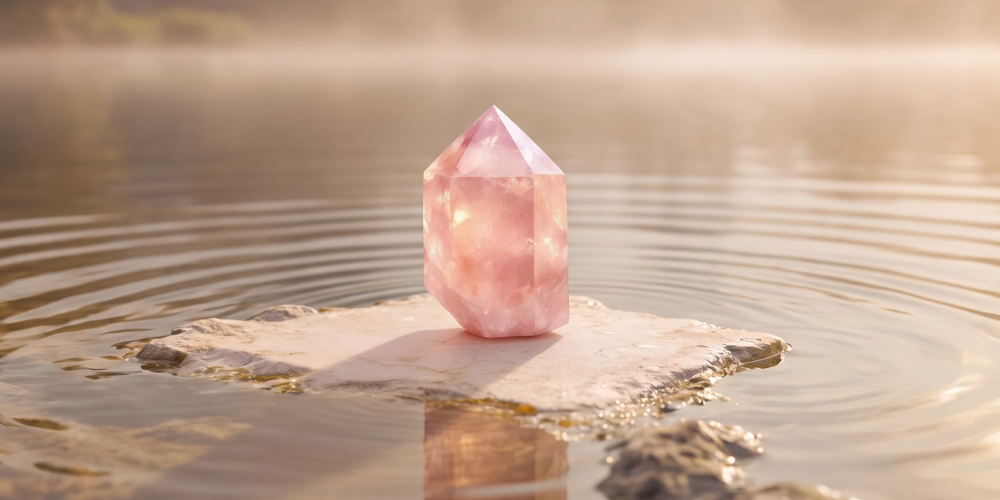
Morganite carries a softness that is easy to miss if you only look at it as a gemstone. Its pale pink glow feels gentle, almost private, as if it were never meant to impress but to comfort. This is a stone often associated with the heart, not because it promises dramatic change, but because it supports the slow, honest work of emotional release.
Unlike crystals known for intensity or protection, morganite moves quietly. Its energy is steady, calming, and deeply reassuring. Many people are drawn to it during moments of emotional fatigue, when strength no longer looks like pushing forward, but like allowing yourself to soften without falling apart.
In this guide, we explore morganite from both grounded and intuitive perspectives. You will learn what morganite is, how its color forms, and what to know about care and treatments, alongside the emotional and symbolic meanings people connect with this stone when they work with it intentionally.
What is morganite?
Morganite is the pink to orange pink variety of beryl, the same mineral family as emerald and aquamarine. In gem terms, it is valued for its pastel glow, its clarity, and the way it can look almost luminous in the right light.
Quick facts (the “real world” side)
Here is a simple snapshot from GIA:
Mineral: Beryl
Color: Pink to orange pink
Mohs hardness: 7.5 to 8 (good for everyday jewelry with normal care)
Color source: Traces of manganese are a key cause of its subtle pink hues
Optical trait: Pleochroism (it can show pale pink and deeper bluish pink depending on angle)
A note on color chemistry: some references also discuss other trace elements in pink beryl. For example, Encyclopaedia Britannica describes morganite as gem quality beryl colored pink or rose lilac and notes heat treatment can shift peach or orange tones toward pink or purplish. The practical takeaway is the same: natural rough often carries warmer tones, and the jewelry market usually prefers the clearer “pinker” look.
Morganite stone meaning (why it is called a heart stone)
On paper, “meaning” can sound abstract. In real life, meaning is what a stone helps you remember.
In crystal traditions, morganite stone meaning is closely tied to:
Love that feels safe, not chaotic
Compassion that includes yourself, not just everyone else
Emotional honesty, especially the kind that happens quietly, in private
A softer nervous system state, where you can breathe again
This lines up beautifully with how Anahata frames morganite in its own offerings: as a frequency of divine love, compassion, emotional harmony, and open-hearted connection.
A gentle historical note
The name “morganite” itself comes from early 1900s gem history. J. P. Morgan was a major gem enthusiast and collector, and after rose beryl was found in Madagascar, gemologist George Kunz proposed the name at a New York Academy of Sciences meeting on 5 December 1910.
It is a fitting origin story: an already rare, tender stone given a name in a room full of people who understood beauty, minerals, and meaning.
Morganite healing properties
Let’s be clear and respectful here.
Morganite is not medicine. No crystal “treats” or “cures.” But crystals can be powerful tools for awareness, ritual, reflection, and nervous system downshifting. The healing people describe is often emotional, energetic, and experiential.
When someone talks about morganite healing properties, they usually mean a combination of these themes:
1) Emotional softening after grief or heartbreak
Morganite is often chosen in seasons where the heart feels bruised. Not dramatic, just tender. People use it when they are ready to feel again, but they do not want to be flooded.
Anahata describes morganite as gently dissolving grief, fear, and old emotional wounds while inviting deeper self-awareness and open-hearted connection.
2) Self-worth, especially when it has been worn down
This is one of the most common “pink morganite benefits” people mention: it supports the internal shift from “prove yourself” to “come home to yourself.”
Not as an instant fix. More like a daily reminder. A small, steady invitation.
3) Calmer connection (less performing, more being)
Morganite is often used for relationship intentions, but the deeper version is this: it helps you show up without armor.
If you tend to overexplain, overfunction, or overgive, morganite is often chosen as a counterbalance. A soft anchor that says: you do not have to earn love by exhausting yourself.
Morganite emotional healing (what it’s often used for)
If you want a simple map, here are common emotional themes associated with morganite:
Grief support: not to erase it, but to let it move
Heart reopening: after betrayal, disappointment, or long loneliness
Self-compassion: especially for people who are hard on themselves
Gentle boundaries: love that does not self-abandon
Peace in partnership: reducing reactive patterns, choosing calm
If any of that makes you exhale a little, you are probably in the right place with this stone.
Morganite crystal for love (romantic love, and the deeper kind)
Yes, Morganite is often called a love stone. But the most mature use of it is not “make someone love me.”
It is: let me stay open without losing myself.
That might look like:
Wearing it to remind yourself to stay soft during conflict
Keeping it near when you are learning to receive (compliments, care, help)
Using it in a ritual to release old stories like “love always leaves”
Holding it during prayer or meditation when you want to forgive, without forgetting your worth
Love is not only romance. It is also repair, tenderness, presence, and honest choosing. Morganite is often used to support that kind of love.
Morganite gemstone uses (easy ways to work with it)
You do not need a complicated ritual. The best spiritual tools are the ones you actually use.
A simple “choose your intention” table
| Intention | How to use morganite | When it helps most |
| Soften the nervous system | Hold it over the heart while breathing slowly | After a stressful day, before sleep |
| Self worth | Wear it as jewelry close to the chest | During confidence dips or big transitions |
| Heart healing | Journal with it nearby, one hand on the stone | When grief or resentment is surfacing |
| Partnership harmony | Place it in a shared space (bedside, altar) | When you want calm communication |
| Letting go | Meditation: inhale “receive,” exhale “release” | When you feel stuck in an old story |
3 quick practices that feel human, not performative
The one-minute heart check
Sit. Put a hand on your chest. Hold the stone. Ask: What am I actually feeling under the surface? No fixing. Just naming.
The “receive” practice
If receiving feels awkward, try this: hold morganite and think of one thing you can let someone do for you this week. Start small.
Bedside reset
Keep it near your bed as a cue to soften your inner dialogue before sleep. If your mind starts listing failures, gently redirect: What did I do well today, even if no one saw it?
Using morganite through sound (Anahata’s approach)
Some people connect with crystals through touch. Others connect through sound.
Anahata’s Morganite alchemy bowl is described as carrying a pure vibration of divine love, compassion, and emotional harmony, with a soft tone meant to calm and support emotional rebirth and partnership themes.
If you resonate with sound healing, this is a beautiful way to experience morganite as frequency, not just as a stone you place on a shelf.
You can explore Anahata Holistic Healing’s work and offerings here.
Buying tips: color, treatments, and what to look for
This is where “accurately researched” matters, because the market reality is straightforward.
1) Color: pink, rose, peach, salmon
Morganite ranges from pink to orange pink, and it is often naturally peachy or salmon-toned.
2) Heat treatment is common
According to GIA, morganite is almost always heat-treated to improve the pink color because heat can drive off a yellow or orange tinge, leaving a purer pink. They also note the resulting color is stable and will not fade, and that this treatment is not detectable.
Britannica also notes that peach or orange tones can transform toward pink or purplish upon high-temperature heat treatment.
What this means for you:
If you want “untreated,” you may need to ask directly and accept that the color may be warmer or less “cotton candy pink.” If you simply want a beautiful, stable pink stone, heat-treated morganite is a normal part of the category.
3) Size and color strength
Strong color is rarer, and stones often need to be larger to show the finest color.
4) Durability for daily wear
Hardness 7.5 to 8 is generally suitable for rings and daily jewelry, but treat it like a gem, not a gym tool.
Caring for morganite (physical care + energetic care)
Physical care (jewelry safe basics)
Clean gently with warm water, mild soap, soft brush
Avoid harsh chemicals and ultrasonic cleaners unless a professional confirms it is safe for your specific piece
Store separately so harder stones do not scratch it
Energetic care (if that is part of your practice)
Pick one method that feels natural:
Smoke cleanse (incense, palo santo, etc.)
Sound cleanse (a singing bowl, chime, or tone)
Moonlight recharge (soft, overnight)
Simple intention reset (hold it and speak what you want it to support)
The point is not perfection. The point is presence.
FAQ
What is morganite, in simple terms?
Morganite is the pink to orange pink variety of beryl, the same mineral family as emerald and aquamarine. Its subtle color is commonly linked to trace elements like manganese, and it is often cut as a gemstone for jewelry and spiritual use.
What does Morganite symbolize spiritually?
In crystal traditions, morganite symbolizes love, compassion, heart truth, and emotional softening. Many people use it as a reminder to stay open without self-abandonment, especially after grief, heartbreak, or long periods of stress and emotional overfunction.
Are Morganite's healing properties scientifically proven?
The mineral facts (hardness, composition, optical traits) are well documented, but “healing properties” are generally spiritual and experiential, not clinical claims. People often use morganite as a supportive tool for reflection, ritual, and emotional intention setting, alongside real-world care and support.
Is Morganite usually heat-treated?
Yes, it often is. GIA notes that Morganite is almost always heat-treated to reduce yellow or orange tones and leave a purer pink, and that the resulting color is stable and not detectable as a treatment.
How do I use Morganite for love?
Use it as a personal anchor, not a “spell.” Wear it near the heart, hold it during a short heart check meditation, or place it on an altar with a written intention like “I choose calm love” or “I receive love without shrinking.” Let it support your choices, not replace them.
Closing thoughts
Morganite’s gift is not intensity. It is tenderness with backbone.
If you are drawn to it, you might be ready for a softer way of living, where love is not something you chase, prove, or perform for. It is something you practice, starting with yourself.
If you want to explore Anahata’s heart-led work, offerings, and sound healing spaces, visit Anahata Holistic Healing. And if Morganite through sound speaks to you, the Morganite alchemy bowl is described as a companion for unconditional love, emotional harmony, and being truly seen and held.