
Holy Fire Reiki Explained: Meaning & Differences
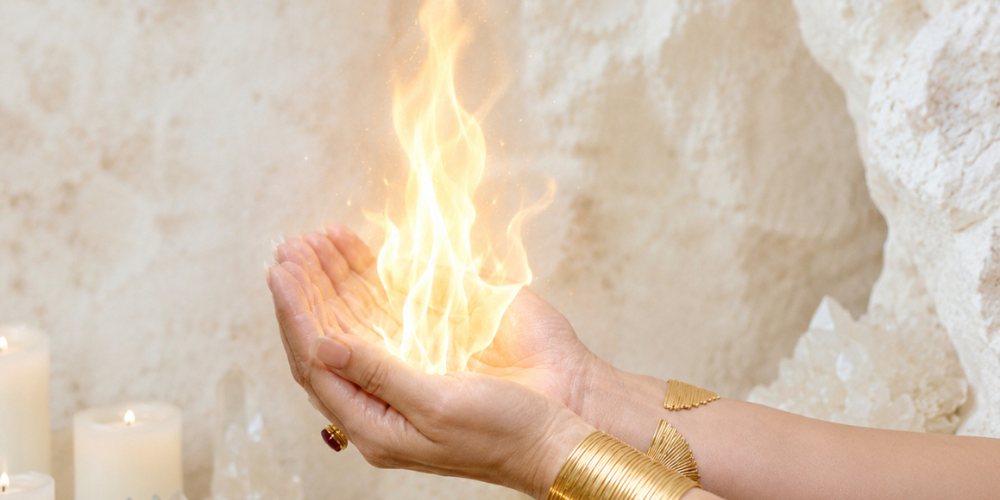
Holy Fire Reiki often raises a quiet but important question. Not whether Reiki works, but whether this newer form is genuinely different or simply a reinterpretation of what already exists.
That question matters because Reiki, at its core, is subtle. It does not rely on force, spectacle, or intensity. Any variation that claims distinction needs to be understood carefully, without hype or dismissal.
Holy Fire Reiki has grown in visibility among long-time Reiki practitioners and those encountering energy work for the first time. Some describe it as more expansive or guided. Others want to know how it compares to traditional Reiki, how it is taught, and what actually happens during a session or attunement.
This guide breaks down what Holy Fire Reiki means, how it differs from earlier Reiki systems, and what people commonly experience, so you can approach it with clarity, context, and discernment rather than assumption.
What Is Holy Fire Reiki?
Holy Fire Reiki is described by the International Center for Reiki Training (ICRT) as a newer form of Reiki that is “powerful and gentle,” focused on purification, empowerment, and guidance, and included as part of their Usui Reiki classes.
One thing that confuses people is the word holy.
In the ICRT’s own definition, “holy” is not meant as a religious label. It’s rooted in the meaning of wholeness, something that helps you return to a more complete, integrated state.
So, when people ask “what is holy fire reiki,” a grounded answer is:
It is Reiki, taught through a specific modern system
It includes new meditations and processes (like ignitions)
It is often presented as a refined, higher frequency expression of Reiki
It is spiritual in tone, but not positioned as a religion in itself
It’s also worth saying plainly: from a medical evidence perspective, Reiki has not been clearly shown to be effective for health-related outcomes, and there is no scientific evidence for the proposed energy field. Most reputable guidance frames it as complementary, not a replacement for care.
That does not invalidate people’s experiences. It simply keeps expectations honest.
Origins of Holy Fire Reiki
Holy Fire Reiki was introduced by the ICRT as a modern development within Reiki. In their materials, they describe it as something that “came” through healing sessions and spiritual guidance, rather than something designed like a technique someone invented on a whiteboard.
Over time, the system has been updated. You’ll see references to Holy Fire II and Holy Fire III, and practitioners often talk about “upgrades” as the system evolves.
Two important notes here:
Privacy and respect for the tradition
ICRT materials state that the Holy Fire symbol and ignition procedures are kept private and not shown to those who have not taken the Master training. So any ethical explanation stays high level.
Not required to switch
Even within Holy Fire communities, the idea is not “everyone must upgrade.” Many people stay with traditional Usui Reiki and feel fully satisfied. Holy Fire training is presented as a choice, not an obligation.
Holy Fire Reiki vs Traditional Usui Reiki
This is the heart of what most people want to know.
Traditional Usui Reiki is usually taught as a practitioner channels Reiki through their hands, often using established hand placements and a familiar structure. Holy Fire Reiki is often described as emphasizing a direct connection between the client and the universal life force, with the practitioner acting more as a facilitator of the client’s experience.
A simple comparison table
| Element | Traditional Usui Reiki | Usui Holy Fire Reiki |
| Core feel | Grounding, steady, nurturing (as commonly described) | Gentle yet “refined” or “high frequency” (as commonly described) |
| Practitioner role | Channels Reiki through hands and structure | Facilitates, with more emphasis on the client’s direct experience |
| Attunements | Often called attunements | Often called “ignitions” in Holy Fire teaching |
| Style | More traditional lineage feel | Contemporary evolution is layered into Usui |
| Spiritual tone | Can be spiritual, varies by teacher | Explicitly spiritual framing in ICRT descriptions, while saying it is not a religion |
What are “ignitions,” really?
In Holy Fire teaching, attunements are often referred to as ignitions, because the experience is described as different enough to need a new name. The teacher still supports the process, but the method is described as simpler and updated compared with older approaches (ICRT framed).
If you’ve heard someone call it “fire reiki” or “reiki fire,” this is usually what they mean: that ignition language, that sense of something being lit within you.
Types of Reiki and Where Holy Fire Fits
People use “types of Reiki” in a loose way online. Sometimes they mean different lineages. Sometimes they mean different teachers’ styles. Sometimes they mean entirely different systems inspired by Reiki.
A clean way to think about it:
Common Reiki systems you may see
Usui Reiki (the foundational system many people start with)
Usui Tibetan Reiki (a style taught in some Western lineages)
Karuna Reiki (a system taught through ICRT as an advanced training path)
Usui Holy Fire Reiki (Holy Fire integrated into Usui classes through ICRT)
So Holy Fire is not usually presented as “separate from Usui” so much as “layered into the Usui Reiki class structure” through the ICRT approach.
What Does Holy Fire Reiki Feel Like?
This is where language gets tricky, because experiences are persWhat you might notice during a session
Some people feel warmth. Some feel tingling. Some feel nothing physical at all, but notice an emotional softness afterward. Some people have vivid imagery during guided experiences. And some people simply fall asleep, which honestly might be the most human outcome of all.
ICRT practitioner stories often describe the energy as warm, calming, and protective, like being surrounded by something supportive.
Karen Harrison’s FAQ also describes a “feeling of being loved” as one of the effects people report, deep, refined, nurturing.
And then there’s real-world conversation.
In a long discussion thread on r/reiki, multiple commenters describe Holy Fire as “higher frequency” or more potent for them personally, while also acknowledging controversy and differences in opinion.
What you might notice during a session
A sense of spaciousness in your chest or breath
Tears that arrive without a dramatic story attached
Heat, heaviness, or gentle pulsing in certain areas
A floaty, dreamlike state
Or a simple calm that feels like coming home to yourself
If you’re asking, “what does holy fire reiki feel like,” the most accurate answer is: it varies, and the safest expectation is relaxation and inner settling, not a guaranteed “big experience.”
Also, if you have a trauma history or you tend to dissociate, it’s wise to work with a practitioner who understands nervous system safety and will keep the session gentle, with consent and grounding.
Holy Fire Reiki Training and Certification
People search for “holy fire reiki training” because they want two things at once.
They want to learn the practice, and they want to know if it is legitimate.
Here’s the grounded truth: Reiki training is widely available, but there is no single universal licensing body regulating Reiki practice everywhere, and some government summaries note there is no formal regulation for Reiki training and certification as a whole.
That means your teacher matters.
A solid Usui Holy Fire Reiki training (Level I and II) is typically taught as an immersive experience with instruction, practice, and an initiation process. AHH Academy’s Usui Holy Fire Level I + II page describes a two-day training and positions it as Usui Holy Fire III Reiki.
Their Master Level page describes a three-day Master training format.
What a good training should include
Clear ethics, boundaries, and consent
Hands-on practice (self-sessions and sessions for others)
Grounding in the Reiki principles and lineage context
Space to integrate, not just “information download”
Support after the class, even if it’s simply guidance on practice
How to choose a teacher (especially if you want a Holy Fire Reiki master path)
Look for:
Transparent training details (days, structure, what you receive)
A teacher who does not pressure you to “ascend” quickly
A practitioner who respects medical care and avoids health claims
A style that feels safe in your body, not just exciting in your mind
Is Holy Fire Reiki Right for You?
Here are a few honest “yes, maybe” indicators.
It may be a fit if:
You want a gentle practice that supports calm and inner listening
You resonate with guided spiritual experiences and meditation
You like the idea of an updated, contemporary Reiki evolution
You want training that blends structure with experiential work
You might prefer traditional Reiki if:
You love traditional lineage focus and classic hand placement structure
You do not want the “upgrade” framing at all
You prefer a more minimal spiritual language in your Reiki practice
And if you’re on the fence, the most practical suggestion is also the simplest: try a session first. Many experienced practitioners say you will know more from one well-held session than from twenty opinions online.
What to expect in your first Holy Fire Reiki session
If you book a session and you’re wondering what will actually happen, here’s a realistic flow:
A short check-in about your intention and boundaries
You lie down fully clothed, usually on a table
The practitioner may place hands lightly or work just above the body
You rest, breathe, and let the session unfold
A closing moment to ground, hydrate, and integrate
Nothing is supposed to be forced. The best sessions feel respectful. Quiet. Human.
Conclusion and next step
Holy Fire Reiki sits in an interesting place. It’s rooted in Reiki, but expressed through a modern system that emphasizes ignitions and guided experiences. Some people feel it is deeply nurturing. Some prefer the simplicity of traditional Reiki. Both can be valid.
If your curiosity is pulling you toward learning, explore AHH Academy’s training offerings for Usui Holy Fire Reiki Level I + II, and if you’re already practicing, their Master Level path as well.
FAQ
What is Holy Fire Reiki, in simple terms?
Holy Fire Reiki is a modern Reiki system taught through the ICRT and integrated into Usui Reiki classes. It’s described as gentle yet powerful, and it uses “ignitions” and guided experiences as part of its training. It’s best understood as a complementary spiritual practice, not medical care.
Is Holy Fire Reiki religious?
Holy Fire Reiki is often described in spiritual language, but ICRT-aligned explanations say it is not meant to be a religion. They define “holy” as wholeness and completeness, and state it works with any religion or none. You can engage it as spiritual support without adopting a new belief system.
How is Usui Holy Fire Reiki different from traditional Usui Reiki?
Many descriptions say traditional Usui Reiki focuses on practitioner channeling with an established structure, while Holy Fire emphasizes a more direct connection experience for the client, with the practitioner facilitating. Holy Fire training also uses the term “ignitions” for attunements, reflecting an updated method within that system.
What does Holy Fire Reiki feel like?
Experiences vary. People commonly report warmth, calm, emotional softening, or a sense of being supported. Some describe it as a “warm, protective presence,” while others feel it as a subtle shift they notice later in mood or sleep. It’s wise to expect gentle relaxation rather than guaranteed dramatic sensations.
Is Holy Fire Reiki training regulated or licensed?
Reiki training is widely available, but there isn’t a single universal licensing authority regulating Reiki practice everywhere. Some government summaries note no formal regulation for Reiki training and certification. That’s why it’s important to choose a reputable teacher with clear ethics and realistic claims.