
The Spiritual Meaning of Sage: Symbolism, Cleansing & What Sage Represents
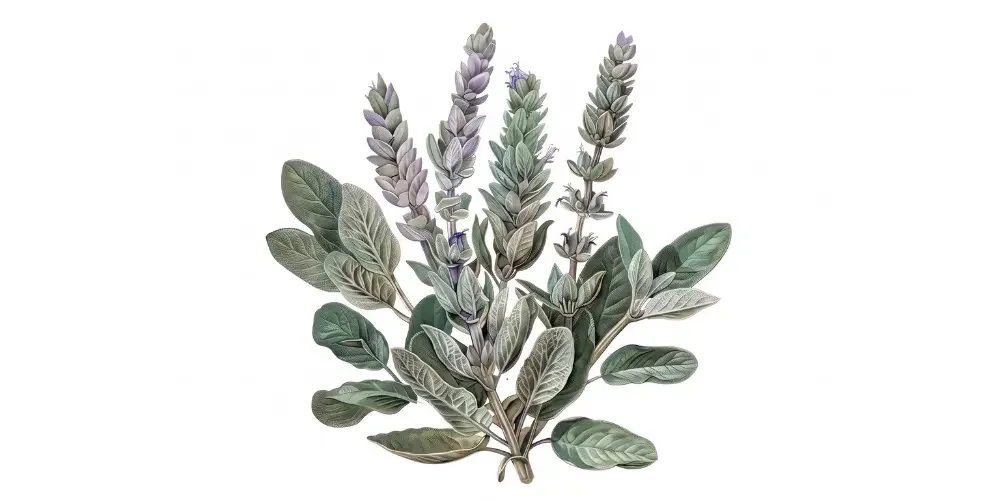
The sage’s spiritual meaning is rooted in wisdom, cleansing, protection, and renewal. In spiritual practice, sage often marks a pause between what was and what comes next, helping people clear a room, settle the mind and approach a moment with greater intention.
There is a reason we reach for sage when something feels off.
Maybe the room still carries the tension of an argument. Maybe we have had people around us all day and need the space to feel like ours again. Or perhaps nothing dramatic has happened. We simply feel distracted, heavy or unable to settle.
Sage has become closely associated with clearing away that feeling.
But the plant has more to offer than smoke and cleansing rituals. It speaks of wisdom, boundaries and knowing when something has run its course. It also has a complex cultural history that deserves more care than it is often given.
Before asking what sage does spiritually, it helps to know which sage we are talking about.
What Is the Spiritual Meaning of Sage?
Spiritually, sage represents clearing the way for better judgment.
That clearing may happen in a room, but it may also happen within us. Sometimes we need enough quiet to recognize that we already know the answer. We have simply surrounded it with worry, outside opinions, and the hope that someone else will make the choice for us.
Sage is often connected with:
Wisdom
Purification
Protection
Clear thinking
Emotional boundaries
Healing after a difficult period
Letting go
Renewal
Its meaning is not really about making everything unpleasant vanish.
A spiritual practice should not teach us to treat every uncomfortable emotion as “bad energy.” Grief is not bad energy. Anger is not always bad energy. Sometimes anger tells us that a boundary has been crossed. Sometimes sadness needs to be felt rather than cleared away.
Sage asks a more useful question:
What belongs here, and what has finished teaching me?
That is where its connection with wisdom begins.
What Does Sage Symbolize?
Sage symbolism has grown from the plant’s physical character, its household use and the many cultural traditions that formed relationships with different plants called sage.
The most common meanings are wisdom, cleansing and protection, but each one carries more depth than it first appears to.
Wisdom that comes from living
A wise person is often called a sage. The word now seems inseparable from knowledge, maturity and sound judgment.
Yet wisdom is not the same as having every answer.
Wisdom may look like changing your mind when new information appears. It may mean leaving a situation before it becomes worse. Sometimes it is knowing that another person’s journey is not yours to manage.
This is the kind of wisdom the sage plant can represent. Quiet, practical, and earned.
Protection through clear boundaries
In spiritual practice, protection is sometimes described as if we are constantly surrounded by invisible danger.
That approach can create more fear than peace.
Sage offers another way to understand protection. It can represent knowing what you will allow into your home, your time, and your emotional world.
A sage plant near the entrance does not have to act as a magical barrier. It may simply remind you to stop opening the door to the same draining pattern.
Cleansing that makes room
Cleansing is not always about removing something terrible.
We tidy a room because we want to use it differently. We wash our hands before preparing food. We open the windows when the air has become still.
A sage ritual can work in much the same way. It marks the decision to begin again with greater care.
The History and Symbolism of Sage
The word sage is used for many plants, and this is where conversations about its spiritual meaning can become muddled.
Common garden sage is Salvia officinalis, an aromatic plant with grey-green leaves and blue to purple flowers. It has a long history as a culinary and medicinal herb and is native to parts of southern Europe.
This is the sage many people grow in a kitchen garden or use while cooking.
White sage, Salvia apiana, is a different plant native to parts of southern California and neighboring regions. It belongs to a specific ecology and has its own history of traditional use.
There are also sagebrush plants in the genus Artemisia. These are not botanically the same as garden sage or California white sage. For example, the plant called white sagebrush in several Plains traditions is Artemisia ludoviciana.
In other words, “sage” is not one universal sacred herb used in exactly the same way by everyone.
When we flatten different plants and peoples into a general story about “ancient sage traditions,” we lose the truth of those relationships.
For a personal practice, common garden sage is often the simplest place to begin. It is widely cultivated, familiar, and does not require borrowing a ceremony that belongs to another community.
What Does Sage Do Spiritually?
Sage does spiritually what a doorway does physically. It helps define a threshold.
You were in one state. Now you are choosing another.
That may be why people use sage:
Before meditation
After a difficult conversation
When moving into a home
At the end of a relationship
Before welcoming guests
After illness or emotional exhaustion
When beginning a new practice
During prayer or reflection
The plant does not do all the work for us.
Burning sage will not repair a relationship if nobody apologizes. It will not create a boundary we refuse to communicate. It will not make a home peaceful while the same harmful behavior continues inside it.
The ritual can, however, help us become clear about what must happen next.
Imagine that you have had an argument with someone you love. You open a window, light a small piece of dried garden sage and allow the scent to move through the room.
The smoke is not deleting the argument.
What it can do is give you a moment to stop replaying it. You can decide what you regret, what still needs to be said, and what you do not want to carry into the rest of the evening.
That is a real spiritual use. Not escape, but return.
Sage in Different Spiritual Traditions
Sage has meaning in different parts of the world, but those meanings should not be treated as interchangeable.
Garden sage in European life
Common sage has long been grown for cooking and traditional household use. Its reputation as a plant connected with health and preservation gradually shaped its symbolism around longevity, good judgment and protection. Kew describes garden sage as having a long history of both culinary and medicinal use.
A herb used repeatedly to care for the household can easily become a symbol of care itself.
In a contemporary practice, garden sage may be grown near the home, placed on an altar or used in a smoke-cleansing ritual without claiming that the practice comes from one specific ancient lineage.
Sage in Indigenous traditions
Various Indigenous nations have relationships with plants commonly translated into English as sage. These are living cultural and ceremonial traditions, not a single practice shared by all Indigenous peoples.
The National Park Service notes that Apsáalooke, Cheyenne, Arapaho and Lakota communities have used different sage plants for physical and spiritual cleansing. It also describes the use of white sagebrush in Cheyenne purification rites and during the Sun Dance.
The word smudging is often used casually in the wellness world, but it can refer to specific Indigenous ceremonial practices.
If you are simply burning a herb in your own home, you can call it smoke cleansing, burning sage or an herbal-cleansing ritual. There is no need to give a personal ritual a borrowed identity to make it feel sacred.
Respect does not weaken a practice. It gives the practice roots.
Modern spiritual practice
Today, people use sage in many personal ways. Some burn it. Some grow it. Others place fresh leaves near a candle, add them to a bath or hold the plant during meditation.
There is no spiritual rule saying sage must create smoke.
The ritual is not less meaningful because you chose the version that suits your body, home and beliefs.
The Spiritual Meaning of Sage Green
Sage green does not have the brightness of fresh spring leaves. It is softened with grey, which gives it a quieter feeling.
The spiritual meaning of sage green is often connected with:
Steady growth
Emotional balance
Rest
Maturity
Grounding
Gentle renewal
Peace without withdrawal
Bright green can feel like the first days of a new beginning. Sage green feels more like the stage that comes after the excitement has passed, when we begin building a life around the change.
It is growth that has learned patience.
That may be why people are drawn to sage green during emotionally busy periods. The color does not demand anything. It makes space.
You might bring sage green into a bedroom, meditation area or journaling corner. You might wear it on a day when you need to feel composed rather than invisible.
The color’s message is simple:
You do not have to rush to prove that you are healing.
The Spiritual Significance of Sage Flowers
Sage is usually discussed for its leaves, so its flowers can feel almost surprising.
Depending on the type, sage flowers may appear in shades of purple, blue, pink, red or white. The wider Salvia genus includes many ornamental species known for their upright flower spikes and wide range of colors.
The sage flower meaning can be understood as wisdom becoming visible.
Leaves hold the scent we associate with the plant. Flowers reach outward. They attract attention, feed pollinators and show that the plant has entered another stage.
Spiritually, sage flowers may symbolize:
Expressing what you have learned
Sharing wisdom without forcing it
Growth after a quiet period
The beauty of maturity
Opening after self-protection
Letting inner work affect the way you live
A purple sage flower may be connected with intuition or contemplation. Blue may suggest honest communication. White may represent clarity, and pink may feel connected with tenderness.
These color meanings are personal interpretations, not fixed laws.
Choose the one that speaks to the season you are in.
How to Use Sage in Your Spiritual Practice
You do not need to fill a room with smoke or perform a complicated ceremony.
Start with a clear reason.
What are you trying to release? What do you want the space to feel like afterward? Is there an action you need to take once the ritual is over?
Burn a small amount of garden sage
Place one or two dried leaves in a fire-safe bowl. Light them carefully, then blow out the flame.
Open a window and allow the scent to move through the room. You might say:
This room has held enough tension for today. I am making space for honesty, rest and a gentler beginning.
Use very little. Never leave burning herbs unattended, and avoid smoke if it is unsuitable for your home, pets or health.
Keep a living sage plant
Caring for a plant can be more grounding than burning one.
Place garden sage in a sunny spot. As you water or prune it, reflect on the parts of your life that also need regular attention.
A boundary is not something we set once and forget. It has to be cared for, just like a living thing.
Try a smoke-free cleansing ritual
Place fresh sage in a bowl of warm water and let its scent release.
You can dip your fingers into the water and touch the doorframe, your meditation table or another meaningful area. Do not apply herbal preparations to your skin without considering allergies or sensitivity.
You might also open the windows, play music, clap your hands or ring a bell.
The goal is not to imitate a smoke ritual without smoke. It is to find the method that genuinely helps you mark a change.
Sit with sage before making a decision
Hold a leaf, notice its texture and breathe slowly.
Ask:
What do I already know?
Which part of this situation is fear making louder?
Am I looking for wisdom or permission?
What choice will I respect myself for later?
What needs to end before something healthier can begin?
Do not force an answer.
Clarity often arrives after we stop interrogating ourselves.
Cook with intention
Spiritual work does not only happen at an altar.
Add garden sage to a meal while thinking about the people who will eat it. Let the act of preparing food become a practice of presence.
You may set an intention for warmth in the home, stronger family bonds or gratitude for having enough to share.
Sometimes the most meaningful ritual looks like dinner.
Frequently Asked Questions
What is the spiritual meaning of sage?
The spiritual meaning of sage is connected with wisdom, cleansing, protection and renewal. People often work with it when closing one chapter, settling the atmosphere of a room or seeking greater clarity. Its symbolism encourages thoughtful release rather than trying to push away every difficult feeling.
What does sage symbolize spiritually?
Spiritually, sage symbolizes mature judgment, clear boundaries and the willingness to begin again. It may also represent protection, not necessarily from an invisible threat, but from habits and relationships that disturb your peace. Its deeper message is to notice what belongs in your life now.
What does sage do spiritually?
Sage can help mark a change in intention. Its scent, smoke or physical presence may prepare someone for meditation, prayer, rest or an honest conversation. The plant does not automatically remove problems or emotions. The spiritual value comes from the awareness and action surrounding the ritual.
What is the spiritual meaning of sage green?
Sage green represents calm growth, grounded healing and emotional balance. Its muted tone feels less urgent than brighter greens, which is why it is often associated with rest and maturity. It can serve as a reminder that progress does not need to be dramatic to be real.
Can sage be used for spiritual cleansing?
Yes, sage can be part of a spiritual-cleansing practice through smoke, water, meditation or simply caring for a living plant. Common garden sage is a practical option for personal use. Indigenous ceremonial traditions involving sage should be approached with respect rather than copied or generalized.
Final Thoughts
Sage is often brought into a room because we want something to leave.
The heaviness. The memory of an argument. The feeling that too many people have had access to us. The version of life that no longer feels right.
But perhaps sage is not only asking what should leave.
Perhaps it is asking what will replace it.
If you clear resentment, will you make room for a conversation?
If you release an old relationship, will you let yourself grieve?
If you cleanse your home, will you also change the patterns that made it feel unsettled?
The spiritual meaning of sage is not found only in the smoke rising from a bowl.
It is found in the moment after, when the room becomes quiet, and you decide what you are willing to carry forward.
Open a window.
Take a breath.
Then listen for the wisdom that was difficult to hear while everything else was still speaking.