
Oracle vs. Tarot: Key Differences & How to Use Oracle Cards for Your Healing Journey
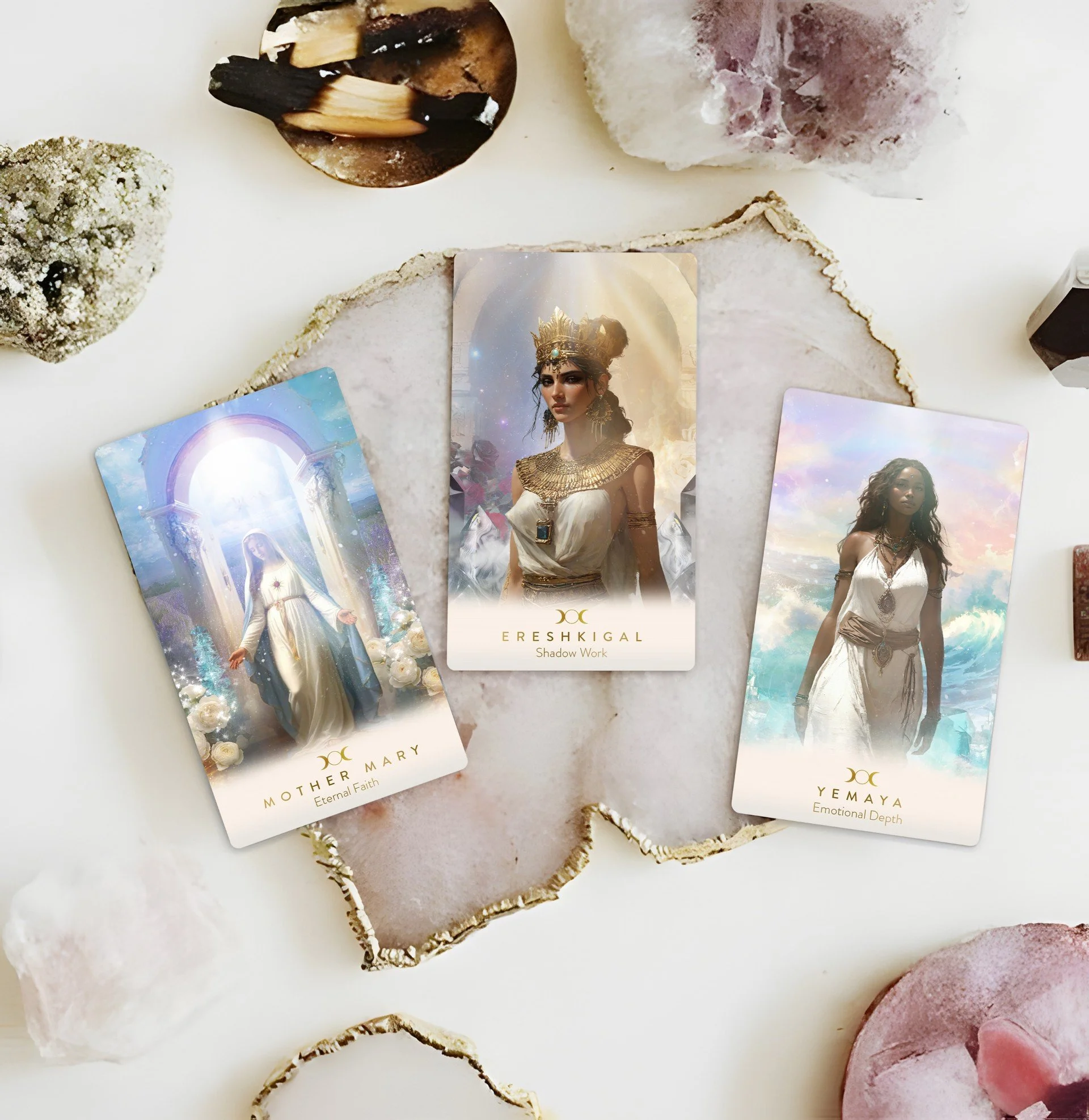
Most people encounter tarot and oracle cards at the same moment in their spiritual exploration, and at first glance, the two seem interchangeable. They both involve card pulls, artwork, and intuitive interpretation. But when you sit with them long enough, and especially when you return to these tools during periods of emotional weight, you begin to notice that they offer very different experiences. Understanding the difference between tarot and oracle cards can help you choose the one that supports your healing journey rather than complicates it.
Tarot leans on tradition. It has a structure that hasn’t changed for centuries, and for some, that structure becomes the doorway into deeper self-study. Oracle cards emerged differently. They grew with spiritual culture instead of shaping it, which is probably why they adapt so easily into healing spaces today. Their tone tends to be softer, more intuitive, and much easier for a beginner (or someone emotionally worn) to sit with.
Where These Two Systems Come From
Tarot has a long ancestry. The earliest versions appeared in 15th-century Italy, used first as playing cards before turning into an esoteric tool. Over time, the tarot took on archetypes, numerology, and symbolism that readers all over the world now share. Every tarot deck, no matter how modern the artwork, rests on that same 78-card backbone.
Oracle decks came later, and no one ever decided what they “should” look like. That freedom allowed creators to build decks around healing themes, mythology, emotional processing, or spiritual principles. Oracle decks could speak in a voice tarot had never tried to occupy.
This freedom is partly why oracle decks have surged in visibility as intuitive wellness practices continue to expand. According to IBISWorld, the wider psychic services industry, which includes tarot and oracle readings, now generates over $2.3 billion USD in annual revenue, reflecting a strong and growing interest in spiritual and introspective tools.
Media reporting also shows a rise in demand for tarot and oracle decks in recent years, as more people turn toward accessible, self-guided forms of reflection and healing. People want guidance that doesn’t require memorizing a system. They want clarity, a moment of pause, and something steady enough to return to during difficult moments.
How Tarot Functions: Symbolism, Structure, and Story
A tarot deck always includes:
78 cards
22 Major Arcana
56 Minor Arcana
four suits
court card
It’s a complete symbolic world built on archetypes like The Fool, The Empress, The Tower, and The World. Readers work with layers, visual symbolism, numerology, elemental correspondences, and relationships between cards. A tarot reading often reveals tension, cycles, shadow patterns, or subconscious influences that people may not articulate on their own.
This is powerful, especially if you enjoy working through complexity. But it does require some learning, and beginners often feel a pressure to “interpret correctly,” which isn’t always what someone needs when they’re simply trying to understand how they feel.
How Oracle Cards Function: Reflection, Intuition, and Emotional Space
Oracle decks don’t follow a universal structure. They can have 36 cards or 55. They can explore angels, animal guides, moon cycles, ancestral healing, or inner-child themes. Because creators have this freedom, messages tend to feel more direct and supportive.
The tone of oracle cards often mirrors the emotional or spiritual work someone is doing. Some decks feel gentle, others more probing, and some simply offer a kind of affirmation that helps steady the mind.
According to the 2022 Mindbody Wellness Index, many people now view spiritual well-being as a core part of their overall health. This rising interest in personal, intuitive practices helps explain why oracle cards are showing up so often in meditation spaces, Reiki sessions, journaling workshops, and holistic healing circles. They don’t ask you to analyze. They ask you to listen.
Choosing Between Tarot and Oracle When You're Just Starting
If you’re trying to decide whether you should begin with tarot or oracle, it helps to look inward rather than outward. Tarot is a system. Oracle is a relationship. Both have their place, but your temperament will tell you which one you need right now.
People who enjoy studying symbolism or decoding patterns often feel naturally drawn to tarot. Those who want emotional clarity or spiritual grounding tend to pick up oracle cards first and stay with them because the messages speak in plain language.
There’s research that supports the emotional benefit of simple symbolic tools. A 2018 study found that people who engaged with symbolic imagery during reflective practices experienced better emotional processing and meaning-making. Oracle cards fit neatly into this category. They are not used for prediction. They are used to help you understand what’s happening inside you.
What an Oracle Reading Really Is
An oracle reading is small, quiet, and surprisingly grounding. It’s not a performance. You sit with a deck, ask a question, sometimes a very simple one, and draw a card. Your first response to the imagery usually reveals more than you expect. Once you read the message, the reading becomes a mirror rather than an answer.
People often pair oracle readings with meditative practices because they help put words to feelings. In breathwork sessions, sound bath ceremonies, or energy healing treatments, the card becomes a point of focus. It helps the mind settle around a theme, which can be incredibly supportive during emotional integration.
Using Oracle Cards as Part of a Healing Ritual
If you want oracle cards to serve your healing journey, you don’t need anything complicated. What matters most is consistency and honesty.
Start with an intention. Ask a question you genuinely care about, even if it feels simple.
Look at the imagery before reading the guidebook. This builds intuition over time.
Let the message unfold throughout the day. Carry the card, journal about it, and revisit it after meditation.
Pair your reading with a practice. Many people use oracle cards alongside Reiki, breathwork, or sound healing because the message can shape the rest of the session.
Trust your emotional response. The insight that rises first is often the one that matters most.
Healing is not linear, and oracle cards reflect that. Some days, a message feels gentle. Some days it feels like the truth you weren’t fully ready to see. Both are valuable.
You can explore Anahata’s curated decks here.
Frequently Asked Questions
Are oracle cards the same as tarot?
No. Tarot follows a set 78-card system. Oracle cards vary in number, structure, and theme.
Is tarot harder to learn?
Most people find it more complex because it relies on symbolism, archetypes, and established meanings.
What does an oracle reading actually do?
It helps you reflect on your emotional or intuitive state. The focus is on clarity, not prediction.
Which should beginners choose?
If you want something structured, choose tarot. If you want something accessible and healing-centred, an oracle is the gentler entry point.
Do oracle cards support emotional healing?
Yes. Their direct, supportive messages make them useful in mindfulness, spiritual practice, and somatic or energy-based healing.
Closing Thoughts
Tarot and oracle cards belong to the same world, but they offer very different experiences. Tarot is a rich symbolic system that rewards study. Oracle cards offer space, space to breathe, reflect, and reconnect with yourself. If your intention is healing, grounding, or rebuilding trust with your intuition, oracle decks can become a steady companion on that path.
They are not there to tell you who you should become. They help you stay present with who you already are.