
Oracle Decks: Understanding Their Wisdom and How to Work With Them
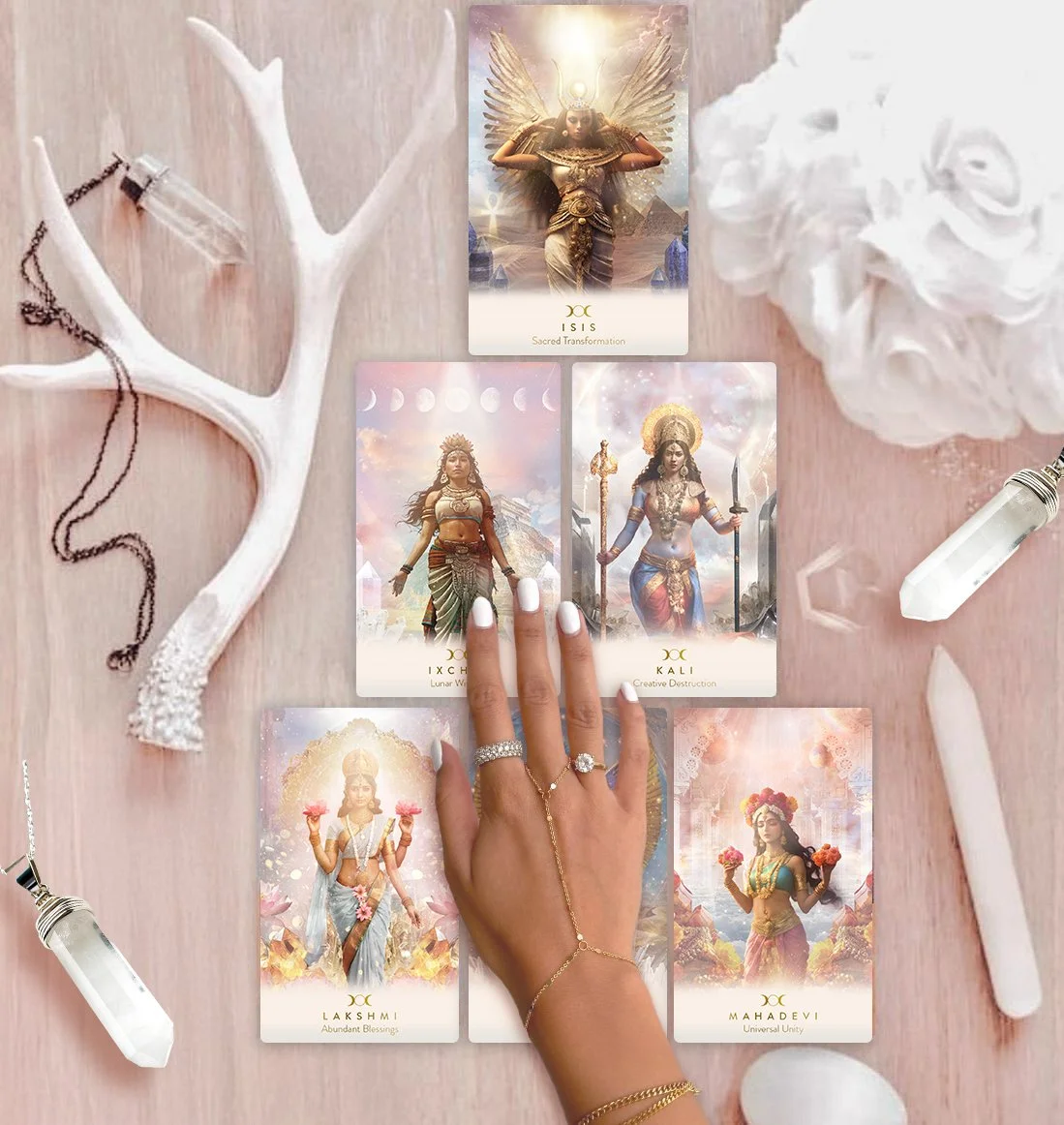
Oracle cards are simple, intuitive tools that use imagery, symbols, and short messages to help you reflect on your inner landscape. You set an intention, draw a card, and explore how its message relates to whatever you’re carrying in that moment.
An Introduction to Oracle Cards
People often reach for oracle decks during moments of uncertainty, curiosity, or transition. Something about them feels approachable. Every deck has its own tone: some speak softly, some carry mythic energy, some feel almost conversational. You’re not required to memorize anything or follow a set system. You simply meet the cards with whatever is on your mind, and they meet you back.
Tarot has a defined structure. Oracle decks don’t. That freedom makes the experience personal very quickly. What you see in a card depends on what you’re living through. A symbol that meant nothing last month may strike you differently today.
These cards are not here to predict. They help you pause long enough to hear your own intuition again, something many people forget how to do in a busy life.
How Oracle Cards Offer Insight
Most readings begin with a question or a feeling that needs clarity. The card you pull doesn’t create meaning out of nowhere; it highlights what has already been moving beneath the surface.
Two people can draw the same card and walk away with entirely different insights. That’s the point. Your mind, memories, worries, and hopes all shape what rises to the top.
Many experienced readers say the first reaction matters most. A color, an expression on the artwork, a single word on the card, it often speaks before your mind has time to analyze.
How to Read Oracle Cards: A Simple, Beginner-Friendly Process
There isn’t one right way to read oracle cards. Still, a few gentle steps help the practice feel grounded.
1. Start With an Intention
A question focuses the reading. It can be specific or open-ended.
What do I need to understand right now?
What energy surrounds this situation?
Where is my attention needed today?
It’s less about precision and more about clarity of mind.
2. Create a Quiet Moment
Even one deep breath shifts your internal state. You don’t need rituals unless they help you settle.
3. Draw a Card
Use whatever method feels natural, top of the deck, a jumper card, or one that catches your eye while shuffling.
4. Look Before You Read
Spend a few unhurried seconds with the artwork. Notice what pulls your attention. This step strengthens your intuitive voice before the guidebook enters the picture.
5. Connect the Card to Your Life
Ask yourself:
What part of this feels familiar?
How does this message interact with my question?
What is the card nudging me toward?
This is where a reading becomes practical rather than abstract.
Working With Oracle Cards in Daily Life
People often weave oracle cards into their daily rhythm, not as fortune-telling tools but as gentle anchors.
Morning Pulls
A morning card sets the emotional tone for the day. Sometimes it encourages patience. Other days, courage or softness. Even a small message can shift how you meet the world.
Evening Pulls
An evening card invites reflection:
Where did you feel aligned?
Where did tension appear?
What did the day reveal about your patterns?
Over weeks, these little notes begin to form a portrait of your inner landscape.
Using Oracle Cards During Decision-Making
The cards won’t make choices for you, and they aren’t meant to. What they do reveal is why a decision feels heavy or unclear.
Seeing the Options More Honestly
Pull one card per possible choice. Sit with the emotional tone each one brings. One may feel open. Another may feel restrictive. Neither is “right” nor “wrong”, they simply mirror how your body reacts when you take away the noise.
Understanding Emotional Layers
Often, the real challenge isn’t the decision but what surrounds it: fear of disappointing someone, hope for change, hesitation about timing. Oracle cards help those layers rise into awareness, so you’re choosing from clarity rather than stress.
Building a Consistent Oracle Practice
A steady rhythm, not perfection, is what deepens your connection with a deck.
Choose a Deck That Speaks to You
When the imagery feels warm or familiar, interpretation becomes easier.
Keep a Light Journal
A simple record, date, card, or short note helps reveal long-term themes. Patterns show up long before we consciously notice them.
Ask Open Questions
Instead of “yes or no,” try:
What am I not paying attention to?
How can I support myself today?
What energy accompanies this decision?
Let the Practice Breathe
Some readings land deeply. Others feel quiet. Both carry value. You don’t need to force meaning; it finds you naturally over time.
FAQs About Oracle Cards
1. What is an oracle card reading?
A reflective practice that uses symbolic imagery to help you understand your emotions, patterns, and choices.
2. Are oracle cards beginner-friendly?
Yes. Most decks are easy to navigate, and one-card readings are an accessible place to start.
3. Do oracle cards have set meanings?
Guidebooks offer suggestions, but your intuition shapes how a card speaks to you.
4. Do I need to follow a spiritual path to use them?
Not at all. Many people use oracle cards for grounding, journaling, or emotional clarity.
5. Can oracle cards help with decisions?
They help you understand your internal response to each option, which often clarifies the choice.
Final Thoughts
Oracle decks invite you to slow down, reconnect with your inner voice, and see your emotional landscape with more honesty. They highlight patterns, encourage reflection, and offer language for things you may not have fully named yet. Learning how to read oracle cards isn’t about technique; it’s about presence.
If you’re exploring tools that support self-awareness and gentle guidance, oracle cards, and Anahata’s grounded approach to spiritual education offer a meaningful place to begin.