
The Spiral Goddess and Triple Goddess: Meaning, Symbol, and Sacred Origins
The spiral goddess is one of those symbols that feels familiar before it is fully understood. A woman’s body. A curve. A spiral near the womb, belly, or heart.
Simple, but not empty.
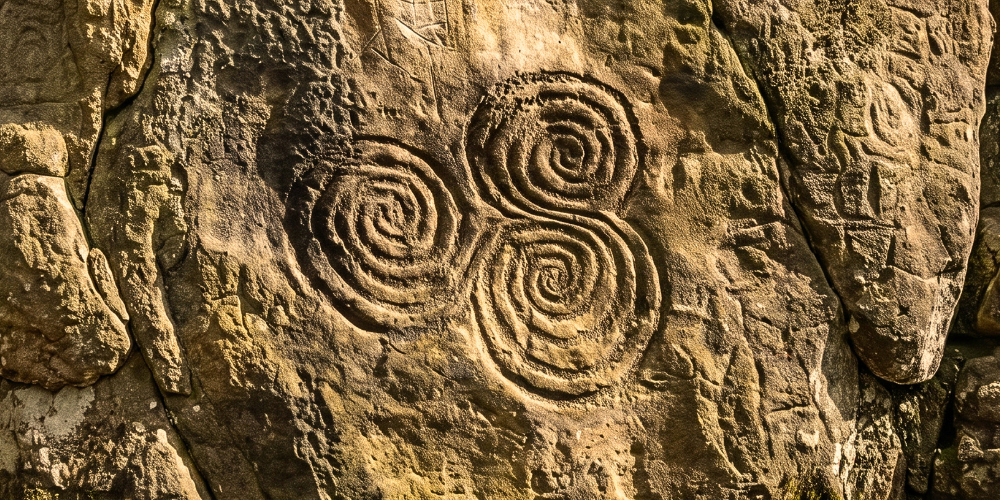
The spiral itself is ancient. It appears in stone carvings, sacred sites, ritual objects, and in nature. Shells, vines, storms, fingerprints, galaxies. The shape keeps returning. At Brú na Bóinne in Ireland, UNESCO describes Newgrange, Knowth, and Dowth as Europe’s largest and most important concentration of prehistoric megalithic art, with monuments tied to social, religious, and funerary life.
That oldness gives the spiral goddess symbol a different weight. It is not only a pretty feminine icon. It carries the memory of cycles: birth, loss, rest, return, and the slow way healing often moves.
For Anahata, that matters. Growth is not always a clean rise. Sometimes the path bends. Sometimes it circles back. Sometimes the return is the healing.
What Is the Spiral Goddess?
The spiral goddess is a modern sacred feminine image that combines the body of a woman or goddess with the spiral. The body brings the symbol into flesh, womb, heart, intuition, sensuality, and lived experience. The spiral brings movement.
That is the easiest way to understand the spiral goddess's meaning. Feminine energy is not fixed. It shifts, sheds, creates, rests, and begins again.
The figure and the spiral: meaning at a glance
The feminine figure is often read as the goddess, priestess, woman, mother, creator, or divine feminine in embodied form.
The spiral near the womb or belly often points to creation. Not only physical birth. Creation can also mean art, healing, a new identity, a spiritual path, a relationship with the self, or a life that is finally being lived with more truth.
This is why the spiral goddess symbol's meaning can feel different from one person to another. For one woman, it may speak of fertility. For another, grief. For another, power is returning to the body after years of disconnection.
Connection to the divine feminine
The goddess spiral is often used in women’s circles, priestess spaces, moon work, altar art, tattoos, and goddess schools because it gives shape to something many women feel but cannot always explain.
The divine feminine is not only softness. It is also instinct, desire, rest, anger that protects what is sacred, wisdom after loss, and the courage to begin again.
Anahata’s Awakening the Goddess Within Mystery School sits in that same current. It is a nine-month journey centered on goddess archetypes, sacred ritual, divine feminine healing, and spiritual embodiment.
The Meaning of the Spiral Symbol
Before the goddess figure was added, the spiral already carried its own language.
A spiral is not a straight line. It is also not a closed circle. It returns, but not to exactly the same place. That is why it feels so close to real healing.
You meet an old wound again, but you are different now. You revisit an old fear, but this time there is more awareness. You return to something you thought you had outgrown, and suddenly realize the work has simply moved to a deeper layer.
The spiral as growth, cycles, and evolution
The spiral goddess symbol often represents growth through cycles. It can speak to:
birth, death, and rebirth
moon phases and seasonal rhythm
healing that happens in layers
feminine power as rhythm, not force
the soul’s return to itself
the body’s wisdom over time
This is why the pagan spiral symbol still appears in ritual spaces and earth-based spiritual traditions. It does not rush the path. It honors rhythm.
Why does the spiral appear across ancient cultures
Spirals appear in many ancient places, but it is important not to flatten them into one meaning. Different cultures used spiral forms in different ways, and some original meanings are still unknown.
Newgrange is one of the best-known examples. It was built around 3200 BC, making it older than Stonehenge and the Great Pyramids of Giza. Its tri-spiral is one of its most recognizable carvings, but Newgrange notes that the original meaning of the tri-spiral is still unknown.
That mystery is part of the symbol’s power. It leaves room.
The Spiral Goddess and the Triple Goddess
The spiral goddess is often connected with the Triple Goddess, especially in modern pagan, Wiccan, and goddess-centered traditions.
Maiden, Mother, and Crone
The Triple Goddess is usually described through three archetypes: Maiden, Mother, and Crone.
The Maiden carries beginning, curiosity, desire, innocence, and initiation.
The Mother carries creation, nourishment, fullness, sexuality, devotion, and power.
The Crone carries truth, endings, elder wisdom, shadow, and the kind of knowing that no longer asks for permission.
These are not strict life stages. A woman does not need to be young to meet the Maiden. She does not need to have children to carry Mother energy. She does not need to be old to know the Crone.
They are inner seasons.
The triple spiral and female power
The triple spiral female power symbol, sometimes called the triskele or triple spiral, is often interpreted today through these three feminine archetypes. Meredith Rom describes the Triple Goddess Spiral as connected with Maiden, Mother, and Crone, with each spiral representing one aspect of the feminine divine.
Wicca also sits in the background of this conversation. EBSCO describes Wicca as a nature-centric modern religion that emerged in early 20th-century England and often honors a goddess associated with the moon and a horned god connected with the sun and nature.
So the triple goddess spiral can be understood as a modern spiritual reading of an older spiral form through feminine cycles, life phases, and sacred womanhood.
Origins and History of the Spiral Goddess
The origin of the spiral goddess is not one clean ancient story.
The spiral is ancient. The goddess-shaped spiral image, as many people recognize it today, is more modern. It is often seen in goddess spirituality, priestess circles, women’s healing spaces, pagan art, jewelry, tattoos, and altar imagery.
Ancient roots and modern goddess spirituality
The most honest way to say it is this: the spiral goddess is a modern sacred feminine symbol made from older sacred pieces.
The spiral brings the ancient layer.
The female body brings the goddess layer.
The womb placement brings creation, life force, and embodiment.
That does not make the symbol less meaningful. Living symbols gather meaning because people keep using them. They are drawn, worn, prayed with, placed on altars, and carried through personal thresholds.
For one person, the goddess spiral may mean fertility. For another, it may mean healing after loss. For another, it may mean creative rebirth or the beginning of the priestess path.
What the Spiral Goddess Teaches About Your Journey
The spiral goddess does not teach constant forward motion.
That is part of why the symbol feels so honest.
A lot of people expect healing to move in a straight line. They want to be done with the wound, done with the lesson, done with the old version of themselves. But real healing is rarely that tidy.
Sometimes you return to the same place because you are ready to meet it differently.
Cycles, return, and trusting the unfolding path
The spiral teaches return without shame.
A quiet season is not failure.
A pause is not wasted.
An ending is not always a punishment.
A return does not always mean you are back where you started.
This is close to the kind of work held through Anahata’s Spiritual Life Coaching, where purpose, intuition, emotional patterns, relationships, and soul alignment become part of the healing process.
Working with the Spiral Goddess in Practice
Working with the spiral goddess does not need to be dramatic.
Some people place the symbol on an altar. Some wear it as jewelry. Some draw it in a journal during a life transition. Some use it during moon practice, womb healing, meditation, breathwork, or priestess work.
A few simple ways to begin:
draw a spiral when life feels like it is changing shape
place the spiral goddess symbol somewhere sacred
reflect on Maiden, Mother, and Crone as inner seasons
use the symbol during moon rituals or meditation
notice when life is asking for a beginning, creation, release, or rest
For deeper practice, Anahata’s Awakening the Goddess Within Mystery School offers a fuller container for goddess archetypes, ritual, feminine embodiment, and sacred remembrance. You can also connect this topic with Anahata’s teachings on the priestess path, high priestess symbolism, spiritual life coaching, and Shehera Barnes’ work.
FAQs
What is the spiral goddess?
The spiral goddess is a sacred feminine symbol that combines a woman’s form with the spiral. It is often used in modern goddess spirituality to represent feminine cycles, creativity, intuition, healing, and return. Many people connect it with womb wisdom, divine feminine energy, and spiritual transformation.
What does the spiral goddess symbol mean?
The spiral goddess symbol's meaning is usually tied to growth, cycles, creation, and feminine power. The goddess figure represents the embodied feminine, while the spiral points to movement, change, and return. Together, they suggest that healing and becoming do not move in a straight line.
What is the triple goddess spiral?
The triple goddess spiral is a three-part spiral symbol often connected with Maiden, Mother, and Crone. In modern goddess and pagan traditions, it represents three faces of feminine energy: beginning, creation, and wisdom. It is also linked with the wider cycle of life, death, and rebirth.
Where does the spiral goddess come from?
The spiral goddess's origin is partly ancient and partly modern. Spirals appear in ancient sacred art, including sites like Newgrange, but the goddess-shaped spiral image is more commonly used in modern goddess spirituality. It brings together the ancient spiral, the female body, and sacred feminine symbolism.
What does the spiral symbolize spiritually?
Spiritually, the spiral often symbolizes growth, return, evolution, and cycles. It can represent the moon, seasons, birth, death, rebirth, and healing in layers. Unlike a straight line, the spiral shows that returning to an old lesson does not always mean going backward.
Conclusion
The spiral goddess has power because it gives room to the whole movement of feminine life.
Beginning. Creating. Grieving. Resting. Aging. Remembering. Returning. Becoming again.
Its ancient depth comes through the spiral. Its modern intimacy comes through the goddess form. Together, they create a symbol that still feels alive because it reflects something the body already knows: life moves in cycles, and the path does not have to be straight to be sacred.
For Anahata, the symbol belongs naturally beside goddess work, priestess remembrance, energy healing, and spiritual ascension. It carries a simple truth without making it too pretty: growth may curve, and it may still carry you forward.