
Sekhmet: The Egyptian Goddess of Healing and Sacred Power
Sekhmet is the ancient Egyptian goddess of healing, war, protection, and pestilence. Shown as a lioness-headed woman crowned by the sun disk, she carried a power that could cause destruction or hold it back, making her both a feared goddess and a guardian of life.
There is nothing soft or passive about Sekhmet’s medicine.
She does not represent healing as a quiet return to who you were before. Her stories speak to the kind of healing that asks something of you. A boundary must be drawn. Anger must be understood. Something that has been tolerated for too long must finally end.
That fierce quality is part of what continues to draw people to the Sekhmet goddess today. Her ancient story belongs to Egypt, but the questions inside it still feel familiar. What do we do with our power? What happens when anger has nowhere healthy to go? Can the force that once protected us become part of our healing?
Who Is Sekhmet, the Egyptian Goddess of Healing?
The lioness goddess of war, healing, and protection
In ancient Egyptian religion, Sekhmet was associated with war, violent storms, pestilence, protection, and medicine. She could bring illness, but she was also invoked to ward it off and restore health. This made her one of Egypt’s most complex deities, not simply a goddess of violence or a gentle goddess of healing, but a presence holding both possibilities at once.
She was commonly shown with the body of a woman and the head of a lioness. Sometimes she holds the ankh, the Egyptian sign of life. Above her head sits the solar disk, connecting her with Ra and the fierce heat of the sun.
To the ancient Egyptians, the lioness was an understandable image for this kind of power. A lioness could nurture her young, defend her territory, and become deadly when protection required it. Sekhmet carried that same refusal to separate care from strength.
Her names and titles
The Sekhmet meaning comes from an Egyptian word connected with power or might. Her name is commonly translated as “the Powerful One” or “the Female Powerful One.” She was also associated with the Eye of Ra, the active force through which the sun god defended cosmic order.
Her name tells us a great deal about her. Sekhmet was not powerful because she had defeated her tenderness. Her healing came through the wise use of the very force that made her dangerous.
The Paradox of Sekhmet: Destroyer and Healer
Why was the goddess of plague also the goddess of medicine
At first, it can seem strange that one goddess ruled both disease and healing. Within the religious imagination of ancient Egypt, however, these roles belonged together. The power believed to send illness was also the power that could restrain it.
One of Sekhmet’s best-known myths tells of Ra sending her to punish humanity after people turned against divine order. Once her fury began, it became difficult to stop. Red-colored beer was placed before her, which she mistook for blood. She drank, fell into a deep sleep, and the destruction ended. Different versions tell the story in different ways, but its heart remains the same: raw power must be brought back into relationship with wisdom.
The story is not simply about anger being bad. It is about anger becoming dangerous when it loses direction.
Many of us know what it is to suppress anger until it turns inward as shame, exhaustion, or resentment. Sekhmet offers another possibility. Anger can be listened to without being allowed to rule. It may reveal where a boundary was crossed, where truth was avoided, or where part of you has become tired of remaining small.
Her priests were early healers
Sekhmet’s link with healing was not only symbolic. The Metropolitan Museum of Art notes that physicians in ancient Egypt belonged to the priesthood. Treatment could involve practical medicine alongside religious rites intended to gain the goddess’s protection or quiet the force of disease.
Ancient Egyptian medicine did not divide physical treatment, prayer, ritual, and magic as sharply as we tend to do today. Sekhmet could be called upon for medical concerns, while other deities were connected with particular illnesses, childbirth, surgery, or protection.
Sekhmet’s Symbols and Powers
The lioness, sun disk, and fire
Sekhmet’s symbols speak before any story is told.
The lioness represents courage, protection, instinct, and the willingness to act. The sun disk connects her with Ra, heat, illumination, and solar authority. Fire belongs to her as both danger and purification, the force that burns but also clears what can no longer remain.
Her statues often show her seated or standing with striking stillness. There is no frantic movement in them. Her strength feels contained. Hundreds of large Sekhmet statues were commissioned during the reign of Amenhotep III, and examples remain in major museum collections today.
That stillness is worth noticing. Sacred power is not always loud. Sometimes it is the quiet certainty that something has to change.
What she governs and protects
The lion goddess of Egypt was associated with:
Protection against enemies and disorder
War and royal strength
Disease, plague, and their prevention
Medicine and physical restoration
The scorching heat and force of the sun
Sekhmet’s protection was not sentimental. It carried teeth. She reminds us that love sometimes protects through comfort, and sometimes through a clear, unwavering no.
Sekhmet vs. Isis: Two Faces of the Divine Feminine
Fierce healing and nurturing magic
Sekhmet and Isis are both linked with healing, yet they express it differently.
Sekhmet’s medicine is direct. She cuts through what threatens life and calls hidden anger back into conscious relationship. Isis heals through devotion, protection, magic, motherhood, and the patient work of restoring what has been broken. In ancient Egyptian tradition, Isis became closely associated with women, children, queenship, magic, and healing.
These goddesses do not cancel each other out. They show us that divine feminine power was never limited to one acceptable expression. It could nurture, protect, grieve, rebuild, confront, and roar.
When each archetype is calling you
You may feel drawn to Isis when you need patience, self-compassion, or faith in the slow work of restoration.
Sekhmet may feel closer when you are ready to stop abandoning yourself. Her archetype often speaks to moments when boundaries have weakened, truth has been swallowed, or anger has been mistaken for a personal failure rather than meaningful information.
This is a modern spiritual reading, not a claim that every ancient Egyptian worshipper understood these goddesses in the same way. Archetypal work allows us to meet an old image inwardly and ask what it stirs in our own lives.
The Modern Meaning of Sekhmet: Fierce Healing Today
Sacred rage, boundaries, and transformation
Sacred rage is not uncontrolled harm. It is anger brought into awareness, given language, and directed toward change.
Sekhmet’s story does not ask you to become harder. It asks whether your kindness has left room for self-respect. It asks whether peace has become another word for silence.
There are seasons when healing looks like rest, forgiveness, and gentle care. There are others when healing means leaving, speaking, grieving honestly, or refusing to carry what was never yours.
Both are sacred.
Working with Sekhmet’s energy
You do not need an elaborate ritual to begin. Sit somewhere quiet and ask yourself where your energy has been leaking through fear, resentment, or overgiving. Write without trying to make the answer sound spiritual.
You might also work with her through:
Naming one boundary you have avoided
Moving anger through breath, voice, or grounded physical movement
Lighting a candle while reflecting on what needs to be released
Choosing one clear action instead of waiting to feel completely ready
The aim is not to imitate a goddess or force an emotional breakthrough. It is to become more honest about your own power.
For those who need support reconnecting with the body and inner steadiness, energy healing can offer a quiet space for release, rest, and reconnection through practices such as Reiki, Pranic Healing, sound, and intuitive care.
Honoring Sekhmet on Your Healing Path
To honor Sekhmet is to remember that your fierceness does not make you less loving.
The lioness does not apologize for protecting what is precious. She does not confuse endless access with compassion. She knows when to rest and when to rise.
You can begin by noticing where you have been asked to shrink, soften your truth, or remain agreeable at the expense of your own life force. Do not rush to fix it. Simply let yourself see it clearly.
Sekhmet’s medicine begins there.
Our Awakening the Goddess Within Mystery School explores goddess archetypes as living mirrors for healing, purpose, confidence, and the reclamation of the sacred feminine.
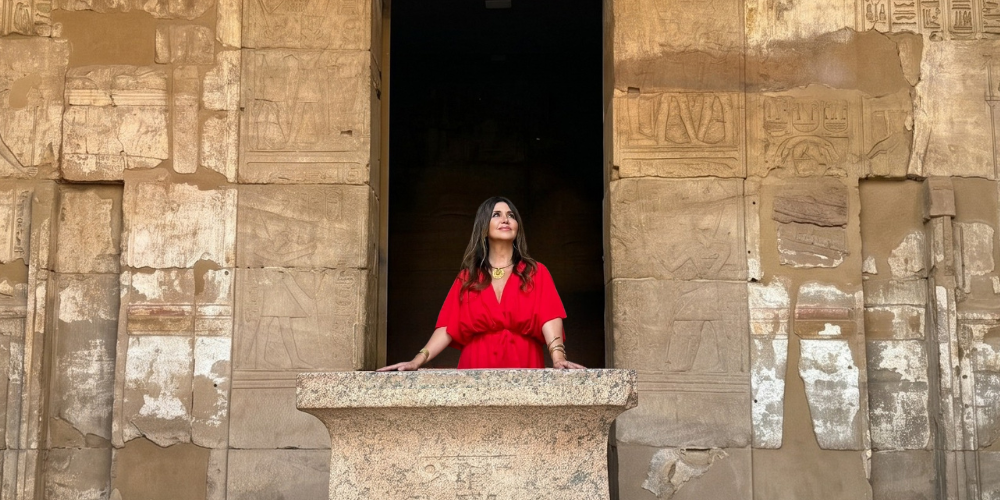
Those who feel called to meet the goddess traditions of Egypt upon their original land can also explore the Sacred Union Retreat in Egypt, an 11-day journey through ancient temples, meditation, ceremony, breathwork, and sacred landscapes.
This work is held by Shehera Barnes, founder of Anahata Holistic Healing, as an invitation to return to what has always lived within you: tenderness with boundaries, love with discernment, and power that knows how to heal.