
What Does a Snake Symbolize Spiritually? Meaning and Symbolism
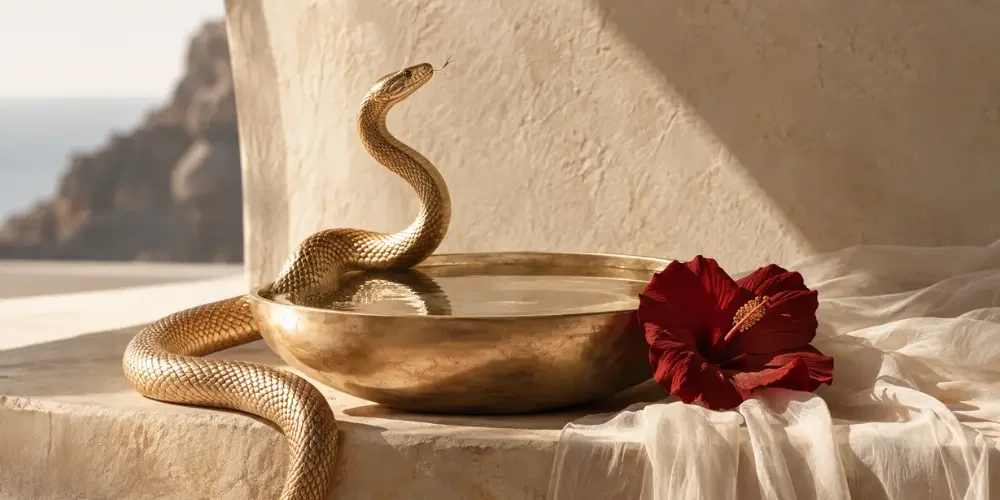
Spiritually, a snake often symbolizes transformation, renewal, healing, instinct, and the life force that moves beneath the surface. Its power as a symbol comes partly from what the animal actually does: it sheds its skin, moves close to the earth, disappears into hidden places, and can inspire both fear and reverence.
There is no single universal snake meaning. Serpents appear in religious and mythic traditions across the world, sometimes as protectors, sometimes as dangerous forces, sometimes as healers, and sometimes as symbols of knowledge or rebirth. The context matters.
What Does a Snake Symbolize Spiritually?
The most common spiritual meanings of the snake are transformation, healing, rebirth, instinct, sexuality, and awakening. A snake can represent a part of life that is changing because the old form can no longer hold it.
That does not always feel graceful. Shedding is friction. Before the new skin is free, the old one has to loosen.
This is why snake symbolism often appears during periods when we are no longer who we were, but have not fully become who we are becoming.
Transformation and rebirth
Because snakes shed their outer skin, they have become an intuitive symbol of renewal in many modern spiritual interpretations. The animal does not throw away its whole body and start again. It continues growing, and the outer layer that once fit eventually has to go.
Spiritually, this can mirror the end of an identity, relationship pattern, belief, role, or coping strategy. The lesson is not “reinvent yourself overnight.” It may be “stop trying to fit back into something that has already become too small.”
Healing
The serpent has a long association with healing in the Greek world. The Rod of Asclepius, a staff with a single snake, became a lasting medical emblem. Historical research on the symbol traces its association with Asclepius and healing back more than two millennia. The two-snake caduceus belongs to Hermes and is historically a different symbol, even though the two are often confused today. A historical review of the caduceus and Rod of Asclepius explains that distinction.
The snake's healing symbolism is not a claim that snakes literally heal us. It is a reminder that healing often requires contact with what frightens us, patience with cycles, and respect for the body's capacity to renew.
Instinct and the body
Snakes move without limbs, responding closely to ground, temperature, vibration, and environment. As a spiritual image, they can call us back to instinct.
What does your body know before the explanation arrives? Where do you tighten? What situation makes you feel alert? What choice brings a quiet sense of relief even before you can justify it?
Instinct is not infallible, especially when trauma or anxiety is involved, but it is information. Snake energy asks us not to abandon the body's voice simply because the mind can produce a more socially acceptable argument.
Snake Symbolism Across Cultures
Serpents carry very different meanings across cultures, so it is better to look at particular traditions than to invent one “ancient snake meaning.”
Ancient Greece and the serpent of healing
In Greek religious history, Asclepius was associated with medicine and healing, and the serpent-entwined staff became his emblem. Snakes were connected with Asclepian healing sanctuaries and the regenerative mystery suggested by shedding skin.
The symbol survives in modern medical imagery, though it is often confused with Hermes' winged caduceus.
Ancient Egypt
In Egyptian symbolism, serpents could protect and threaten. The upright cobra, or uraeus, became a powerful royal and divine emblem associated with sovereignty and protective force. Other serpent figures represented disorder or danger in myth.
The same animal therefore could not be reduced to “good” or “bad.” It carried power, and power had to be placed in relationship to a specific deity, myth, or ritual context.
South Asian traditions
Serpent imagery appears in Hindu and Buddhist traditions in varied forms, including nāgas and the coiled-serpent image used in later descriptions of kundalini. Again, these are not one tradition. Their meanings can include protection, water, fertility, hidden power, spiritual force, and guardianship depending on the context.
The Snake and Kundalini Energy
In modern yoga and esoteric language, kundalini is often pictured as a coiled serpent resting at the base of the spine. As the symbolism goes, awakening involves that latent force rising through the subtle body.
The serpent is a powerful image because it suggests potential rather than performance. Coiled energy is not wasted energy. It is energy that has not yet been asked to move.
At the same time, kundalini practice deserves respect. It is not a challenge to force intense sensations or chase dramatic spiritual experiences. If you are curious, begin with a grounded explanation of kundalini yoga and read what to know in our kundalini guide for beginners.
Shedding the Skin: What the Snake Teaches About Rebirth
We often say we want transformation when what we really want is improvement without loss.
Snake symbolism is less sentimental. Growth can require leaving something behind. A friendship may no longer fit. A role that once protected you may now keep you small. A belief that helped you survive one chapter may make the next chapter impossible.
Ask yourself:
What is becoming tight around me?
Which identity do I keep defending even though I no longer live inside it?
What would change if I stopped treating endings as failure?
Where am I trying to grow without making space?
Rebirth is rarely about becoming a stranger to yourself. It is often about removing what has been obscuring you.
What Does It Mean to See a Snake?
Seeing a snake in waking life first means you encountered an animal. Safety and respect for wildlife come before symbolism.
If the encounter feels spiritually significant, you can reflect on the context rather than treating it as a fixed omen. What was happening in your life? How did your body respond? Were you afraid, calm, fascinated, or unusually attentive?
A snake sighting may become a personal symbol of change, boundaries, instinct, or hidden knowledge because of what it awakens in you. That is different from claiming the universe sent a guaranteed prediction.
What Does a Snake in a Dream Mean Spiritually?
Dream snakes can carry many meanings. The emotional tone matters more than a generic dream dictionary.
A snake that bites may point toward a fear, conflict, or truth that feels impossible to ignore. A snake shedding may mirror transition. A calm snake may symbolize contained power or intuition. Many snakes may represent overwhelm, fertility, fear, transformation, or simply recent waking-life imagery.
Ask what the snake was doing, how you felt, and what in your current life shares that emotional texture.
Working With Snake Energy
You do not need a literal snake, a dramatic ritual, or an exotic spiritual identity. Work with the symbol in ways that deepen awareness.
Use the shedding question
Write down one thing you have outgrown. Then write what you are afraid will happen if you release it. Often the old skin is not only a habit. It is a form of protection.
Move close to the ground
Try slow floor-based movement, restorative yoga, or simply lying on the earth. Let the snake remind you that spirituality does not have to lift you out of the body. It can bring you more fully into it.
Work with energy consciously
If the serpent is appearing alongside themes of awakening or healing, energy healing can offer a guided way to explore what feels ready to move. Our guide to what a spiritual healer is can also help you choose practitioners with discernment rather than giving your authority away.
Frequently Asked Questions
What does a snake mean spiritually?
A snake commonly symbolizes transformation, shedding, healing, instinct, life force, and renewal. Its meaning changes across cultures and personal contexts. Spiritually, the snake often appears as an image of growth that requires releasing an old form rather than trying to carry it indefinitely.
What does it mean if I dream about a snake?
A snake dream may relate to change, fear, instinct, sexuality, healing, hidden knowledge, or a situation that demands attention. The most useful interpretation comes from the dream's emotional tone and your life context. A peaceful snake and a threatening snake should not automatically receive the same meaning.
What does a snake symbolize across cultures?
Serpent symbolism varies widely. Ancient Greek traditions link the snake with Asclepius and healing. Egyptian symbolism includes protective royal cobras as well as dangerous serpent forces. South Asian traditions include nāgas and kundalini imagery. It is inaccurate to flatten all of these into one universal serpent teaching.
What is kundalini serpent energy?
Kundalini is often represented in modern yogic and esoteric teaching as a coiled serpent at the base of the spine, symbolizing latent spiritual energy. Practices associated with kundalini aim to cultivate awareness and movement of that energy. They are best approached gradually and with grounding rather than by chasing intense sensations.
Is seeing a snake a good spiritual sign?
A snake encounter is not automatically good or bad. If it feels meaningful, consider what the animal brought up in you and what was happening in your life. It can become a symbol of transformation, boundaries, instinct, or renewal, but it should not be treated as a guaranteed prediction or omen.
Transformation Does Not Need to Look Beautiful
The snake is not beloved because it makes change look comfortable. It reminds us that growth has texture. There is friction, vulnerability, a period when the old covering is loosening, and the new one is not yet fully revealed.
If the snake is speaking to you as a symbol, perhaps the question is not “What is coming?” It may be much closer: “What no longer fits?”