
What Is a Priestess? Meaning, Role, and the Modern Priestess Path
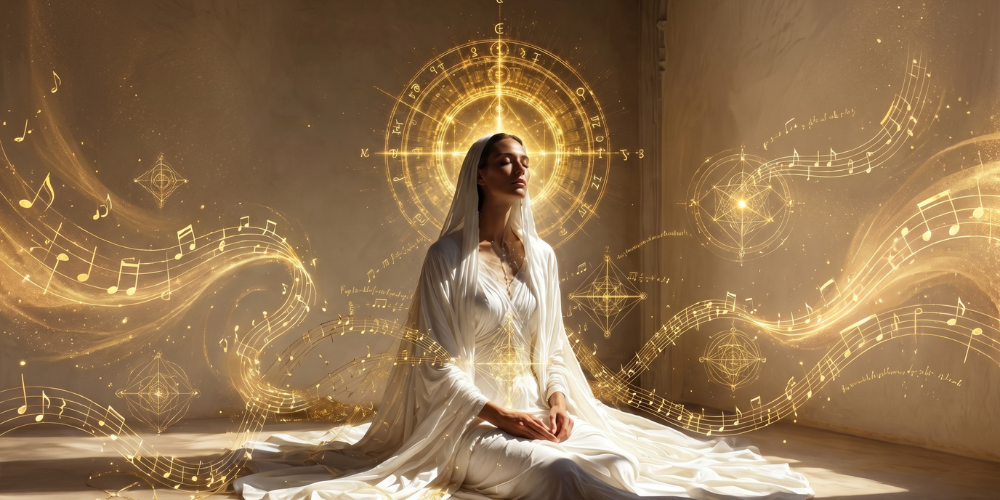
The simplest meaning of priestess is a woman devoted to sacred service. Historically, priestesses performed rites, tended temples, served particular deities, and sometimes acted as oracles. Today, the word can also describe a woman who brings ritual, spiritual awareness, inner listening, and service into the life she is already living.
Many women meet the word priestess with a strange sense of familiarity.
They may not know where the feeling comes from. They simply know that ordinary spiritual language no longer holds everything they are experiencing. There is a pull toward ritual. Toward the Goddess. Toward silence, dreams, healing, ceremony, or gathering women together.
This article holds two sides of that word. There is the priestess as a real historical religious role, which looked very different from one culture to another. Then there is the modern priestess path, a living spiritual archetype through which women explore devotion, inner authority, and sacred service.
At the heart of Shehera’s work, and of the Awakening the Goddess Within Mystery School, is the understanding that this path is not about performing a new identity. It is an invitation to remember the wisdom, gifts, and sacred presence already waiting within you.
What Is a Priestess? Meaning and Origins
The word’s roots and historical role
Historically, a priestess was a woman who held a recognized religious office. She might conduct ceremonies, prepare offerings, care for a temple, interpret divine messages, sing sacred hymns, or serve a particular goddess or god.
There was never one universal priestess role.
Her responsibilities depended on the religion, period, temple, community, and status into which she was born or initiated. Some priestesses held considerable authority. Others served in supporting ritual roles. Some lived within temple communities, while others carried out religious duties alongside family and civic life.
What joined these roles was a commitment to tending the relationship between human life and the sacred.
Priestess, priest, and High Priestess
A priest and a priestess may carry comparable religious duties, with the title traditionally reflecting gender. A High Priestess usually refers to a woman with greater seniority, authority, experience, or responsibility within a particular temple or spiritual tradition.
In modern spirituality, these titles are used more freely. There is no single institution deciding who may call herself a priestess.
That freedom makes discernment important. A title should not be used to create distance or superiority. It should point toward the depth of study, service, responsibility, and lived experience behind the woman carrying it.
What Does a Priestess Do?
Tending the sacred, ritual, and the divine feminine
A priestess tends what a community considers sacred.
In an ancient temple, that could mean making offerings, singing, caring for sacred objects, preparing ritual space, or serving a deity through formal rites. In modern life, priestessing may happen through ceremony, women’s circles, healing work, prayer, writing, teaching, creative practice, or caring for the earth.
Meredith Rom describes the priestess as someone called first to serve, listening deeply and giving form to what she receives through communion with the Divine.
Service is the thread that keeps the path grounded.
Without it, the priestess can become an image to wear. With it, her spiritual life begins to benefit the people and places around her.
A bridge between the everyday and the sacred
A priestess does not necessarily leave ordinary life behind.
She may bless a meal before eating. Mark a new moon with a few quiet minutes. Hold a ceremony for a birth, death, separation, marriage, or new beginning. She notices thresholds and gives them care.
This is one way of understanding the priestess as a bridge. She reminds us that the sacred is not found only inside temples. It also lives in kitchens, gardens, grief, friendships, bodies, and the choices we make when no one is watching.
A woman may be doing this work long before she ever calls it priestessing.
The Priestess Across Cultures and History
Egyptian, Greek, and Celtic traditions
Ancient Egyptian women held a range of temple roles. Some served as musicians and singers, while others carried formal titles such as “God’s Wife.” The Metropolitan Museum of Art identifies Tagerem, who lived during the Ptolemaic period, as a priestess and special temple functionary connected with the god Re.
In ancient Greece, one of the most famous priestesses was the Pythia at Delphi. She served as the oracle of Apollo and was consulted on decisions that could be deeply personal or politically significant.
The picture is less straightforward when we speak about Celtic priestesses. Women certainly appear in Celtic religious stories and later accounts as healers, prophets, or figures associated with ritual. However, historians continue to debate the evidence for a clearly defined class of female druids or priestesses across Celtic societies. It is more honest to speak of varied female religious roles than to imagine one unified Celtic priestess tradition.
These differences matter. The modern priestess archetype may draw inspiration from the past, but it should not flatten many distinct cultures into one invented history.
Priestesses and the goddess archetype
In many modern spiritual communities, the priestess is closely tied to Goddess traditions and the divine feminine.
She may feel drawn to Isis, Sekhmet, Inanna, Mary Magdalene, Mother Mary, Hathor, or another sacred figure whose story opens something within her.
The goddess becomes a mirror.
One woman may meet Isis during a season of rebuilding. Another may feel Sekhmet near when she is learning to protect her energy. The Spiral and Triple Goddess may speak to someone moving through cycles of beginning, fullness, loss, and renewal.
This is archetypal spiritual work. It does not mean claiming to reproduce an ancient religion exactly as it once existed.
The Modern Priestess: What the Path Looks Like Today
Everyday priestessing
The modern priestess path can be quieter than people imagine.
It may look like:
Creating rituals that bring meaning to important transitions
Listening before offering advice
Keeping a devotional or meditation practice
Holding women’s circles or healing spaces
Studying spiritual traditions with care
Using creative, intuitive, or healing gifts in service
Living with greater awareness of natural and inner cycles
Kate Murphy describes the contemporary priestess as a guardian of sacred wisdom, a space holder, healer, guide, and bridge between material and spiritual life.
That does not mean every priestess must become a public teacher. Some serve through family, art, caregiving, community work, or the way they bring presence into a room.
Signs you may be called to the priestess path
The calling often arrives before the language.
You may feel drawn to sacred spaces without knowing why. Your dreams become more vivid. Ritual begins to feel natural rather than performative. You long for deeper conversations, women’s community, time in nature, or a more direct relationship with the Divine.
You may also feel that your voice wants to be used differently. Not simply to be heard, but to bring comfort, truth, beauty, or healing into the world.
These experiences can be meaningful, but they are not a test you either pass or fail. A spiritual calling becomes clearer through practice, patience, and the way you choose to live.
The Priestess Archetype and Your Inner Authority
Reclaiming the divine feminine
For many women, the priestess archetype appears during a period of reclaiming.
Perhaps you learned to distrust your intuition. Perhaps your sensitivity was treated as weakness. Maybe you became skilled at reading everyone else while losing contact with yourself.
The priestess path creates room to listen again.
The divine feminine, in this context, does not mean that women must always be soft, receptive, or nurturing. It includes rest and action, intuition and intellect, tenderness and boundaries. It restores parts of feminine experience that have often been dismissed, controlled, or pushed out of spiritual authority.
How priestess work supports healing and self-trust
Priestess work may include ritual, meditation, energy practices, reflection, movement, prayer, and honest conversation.
These practices can create space for a woman to hear her own life more clearly. The goal is not dependence upon a spiritual guide. It is a stronger relationship with her own discernment.
That principle is central to Shehera’s philosophy at Anahata: guiding people toward their own healing abilities and spiritual potential rather than positioning herself as the source of their power.
For personal support with this process, Spiritual Life Coaching can offer space to explore purpose, inner blocks, intuition, and the changes you feel ready to make.
How to Begin Walking the Priestess Path
You do not have to begin with a title.
Begin with devotion.
Choose one practice you can return to. Light a candle in the morning. Sit in silence before reaching for your phone. Keep a journal beside your bed. Learn the history of a goddess who keeps appearing in your life. Create a small altar with objects that carry real meaning for you.
Then notice what your practice asks of you outside the sacred moment.
Does it ask for a boundary? An apology? More rest? A difficult truth? A creative offering you have delayed?
The priestess's path becomes real when devotion changes the way you live.
Study helps. So does community. The Awakening the Goddess Within Mystery School offers a nine-month journey through goddess archetypes, sacred practices, spiritual gifts, ritual, and feminine embodiment under Shehera’s guidance.
Women who feel a particular call toward Egypt may also explore Anahata’s Sacred Union Retreat, where temple visits, meditation, ceremony, and time along the Nile create space for a more direct encounter with these ancient landscapes.
Questions Women Often Ask About the Priestess Path
What does the word priestess mean?
A priestess is a woman devoted to religious or spiritual service. Historically, she may have performed ceremonies, cared for a temple, served a deity, or delivered oracles. In modern spirituality, the word often describes a woman who tends to ritual, intuition, sacred space, healing, and service.
What is the difference between a priestess and a High Priestess?
A priestess walks a path of devotion and sacred service. A High Priestess generally carries greater experience, leadership, or ritual responsibility within a tradition. The word “high” should describe maturity and accountability, not greater spiritual worth.
What does a priestess do in spirituality?
A modern priestess may lead rituals, hold circles, offer healing work, teach, pray, create sacred art, mark life transitions, or support others through change. Her role depends on her training, gifts, community, and spiritual tradition.
How do I know if I am called to be a priestess?
You may feel drawn toward ritual, spiritual study, goddess traditions, healing, dreams, nature, sacred service, or women’s community. The calling usually becomes clearer through steady practice. There is no need to rush into naming yourself.
What is the modern priestess path?
The modern priestess path is a lived practice of devotion, inner listening, ritual, self-trust, and service. It brings spiritual awareness into daily life rather than keeping it separate. There is no single version of the path, although integrity and responsibility should remain at its center.
Let the Path Reveal Itself Slowly
There is no need to decide today whether you are a priestess.
Stay near what is calling you.
Read. Pray. Sit in silence. Learn the history without turning it into fantasy. Notice which rituals make you more present and which ones simply make you feel spiritual for a moment.
Most of all, watch how the path changes your relationships, your choices, and the way you care for your own life.
The priestess does not exist only during the ceremony. She appears in the woman who trusts herself enough to tell the truth, tend what is sacred, and offer her gifts without leaving herself behind.
You can learn more about Shehera Barnes and the lived healing path behind Anahata Holistic Healing, or explore the Awakening the Goddess Within Mystery School when you feel ready to walk this path in a guided circle of women.